The Covid-19 experience has been quite the wake-up call for many of us, not just for the obvious reasons but also because many highly achieving, super-efficient people have found themselves floundering when they are out of their usual medium having to cope with the day-to-day reality of feeding the family, doing the laundry, stimulating and home-schooling the kids and planning menus, not to speak of keeping the peace during these challenging times. Learning a language or how to play a musical instrument or delving deep into an unfamiliar subject has been deliciously distracting – yoga and exercise do it for some, a new hobby, maybe gardening, embroidery or China restoration.

Being able to get out for walks in the countryside has been a life-saver for those who were cooped up indoors for weeks on end – so I’m going to devote this post to summer foraging to focus on the many delicious edible foods growing around us not just in the wild but also in urban areas.
There has also been a very positive response to my ‘Wild Food of the Week’ in my weekly column Irish Examiner and I get regular questions and photos from readers asking if something is edible. Here at the Ballymaloe Cookery School, we’ve been doing Foraging courses throughout the seasons for over 20 years and we all continue to add to our knowledge of the abundance of wild and free food all round us.

Apart from the fun and extra dimension foraging adds to a walk collecting food in the wild, there’s an even more important reason to become more knowledgeable about the free bounty of nature. A high percentage of foods, berries and nuts in the wild are edible. Unlike many conventional foods they have not been tampered with to produce maximum yields at minimum costs so their full complement of vitamins and minerals and trace elements are intact making them highly nutritious and nutrient dense, up to 20 times, more than in the ultra-processed food on which so many of us depend nowadays.

One can forage all year but there are particularly rich pickings at present both in the countryside and along the seashore! So let’s mention a few, succulent marsh samphire (salicornia europaea) which is also known as glasswort because it was used in the fourteenth century by glass makers, grows in marshy areas close to the sea. It’s at the peak of perfection as present, full of Vitamin A, Calcium and iron, nibble raw or blanch it in lightly salted water – it’s salty crunch is great with fish or indeed with lamb. Sea Purslane which grows close is also abundant at present.
Pretty much everyone recognises dandelions, I regularly urge people to nibble at least one dandelion leaf a day or pop some into a green salad – full of vitamins A, C, and K, calcium and iron.
Gardeners will be cursing chickweed at present, it romps around the garden between the vegetables and in flower beds. Where others ‘see weeds, we see dinner’. Pick the chickweed and add to salads or wilt it like spinach, add to mashed potato, risotto or pasta. It too is highly nutritious. There’s several varieties of wild sorrel about too, buckler leaf sorrel, lambs tongue sorrel and common field sorrel. There’s masses of fluffy meadow sweet along the roadside at present, it will last into early autumn – use to flavour panna cotta, lemonade, custards…Watch out for wild mushrooms too, I found just one ‘field’ mushroom yesterday but they usually pop up in warm muggy weather in fields or even on lawns that haven’t had chemicals added. The flavour is exquisite, don’t waste a scrap. Chop or slice a glut (including the stalks), sauté and freeze to add to a stew or make into a ketchup.
And there’s so much more. If you’d like to learn more about foraging on land and along the seashore, perhaps you would like to join Pat Browne and myself on Saturday, 25th July for a 1-Day Summer Foraging course. Numbers limited, booking essential – 021 4646785
If you’re a newbie to foraging, be careful – don’t nibble anything you are unsure of, and introduce foraged food gradually into your menu, better not to binge at first.
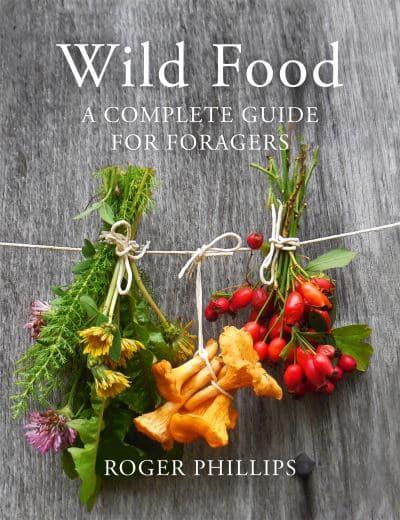
Buy a good beginner's guide to foraging.