Showing posts with label travel. Show all posts

Monday, 25 July 2022

A Trip to Copenhagen

 Just returned from a few action-packed days in Copenhagen, still a super exciting food town. 

 I’d been invited to join a friend’s table at NOMA, René Redzepi’s internationally acknowledged restaurant in the midst of a garden overlooking the famous Copenhagen incinerator and ski slope.  It’s been awarded the best restaurant in the world for 3 years in a row in the World’s 50 Best Restaurant Awards.

Having achieved all possible accolades,  René has decided to follow in the footsteps of Ferran Adrià of El Bulli in Spain so this will be the last season of NOMA.  


He’s working on a new project yet to be revealed.  The whole NOMA experience is unforgettable from the moment you are welcomed on arrival.  One walks up the beautiful borders of swaying grasses and perennials interspersed with fresh herbs to the restaurant.  The planting plan was designed by Piet Oudolf who created the garden on the Highline in Manhattan.  The food is creative, complex and delicious. 


René and his team greeted us warmly with a glass of sparking fizz,

Fifteen memorable vegetarian courses followed – I would have no idea how to create any of the complex multi-ingredient dishes with up to 5 or 6 people working on each course.  Many are willing interns anxious to learn in this famous kitchen.  The name NOMA on your CV, certainly opens doors but nowadays questions are frequently being asked about the future of this practice. 


Some of the produce and fresh herbs come from the gardens and the glasshouse beside the kitchens and the fermentation and pickles are a revelation.  But Copenhagen is not just about NOMA, the restaurant that is credited with starting the Nordic food revolution and transforming Copenhagen into the culinary capital of the world. 

During the pandemic, NOMA opened Popl, a NOMA burger joint selling fat, juicy burgers made from organic grass-fed beef.  It too is a huge success but I particularly love the little cafés cum bakeries, wine bars and cocktail bars all of which serve a selection of delicious small plates.  In the few days we were there we tried as many as possible.


Lille Bakery in Refshaleøen is in an old industrial area in a non-auspicious part of town.  It was started in 2018 on a shoestring by Jesper, Mia and Sara who met at 108, the Michelin-starred restaurant of René Redzepi.  


Tables are a mixture of junk shop finds and timber cable reels but the sourdough bread, flaky croissants, cardamom buns, sausage rolls and baked goods are exceptionally delicious.  I was thrilled to find that one of our past students, James Lang who learned to bake his first loaf of sourdough in our Bread Shed here at the Ballymaloe Cookery School was one of the bakers in this tiny but exceptional bakery. 


I also loved their typical Danish breakfast, a ham and cheese sourdough sandwich slathered generously with butter and I’m still dreaming about the soft, puffy Berliner, a doughnut with no central hole in the centre filled with a rhubarb cream and topped with a little smidgeon of meringue.


Alice Café is another hidden gem in Markmandsgade 1.  It too has a short menu of very good things and some say the best hand-crafted ice-cream in Copenhagen.  The notice board on the wall told us the time when the sourdough buns, flaky croissants, tebirkes (poppy seed pastries), cardamom twist and teboller (buttermilk buns) would be coming out of the oven.  


Apart from really sensational bread, each has their own specialities and devotees.  We also visited the Hart Bageri owned by Richard Hart, originally Chad Robertson partner at Tartine (in California) and later head baker at NOMA.  His bread is legendary and he too had his specialities – a burnt basque cheesecake plus cardamom croissants and spandauer – a black sesame cookie to die for! 


And then there was Atelier September, one of my favourite breakfastplaces in Copenhagen. 
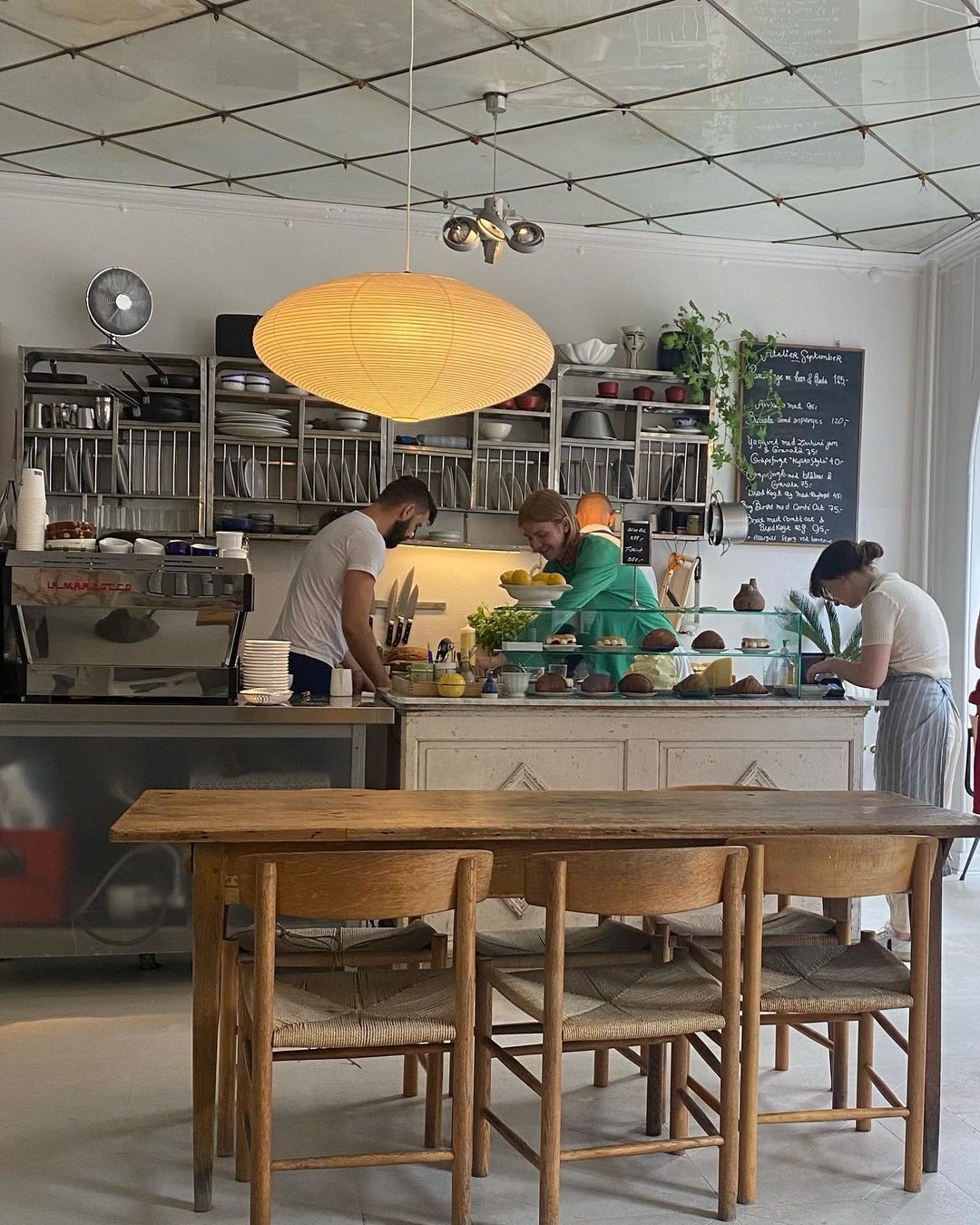


Grapefruit with mint, Kyoto style. Yogurt with granola and zucchini jam, Comte cheese with rye bread and butter.


And yet another gem, Hahnemann’s Køøken in Østerbro. When I arrived Trine Hahnemann was teaching a French group from Brittany how to make a selection of Danish smorgasbord
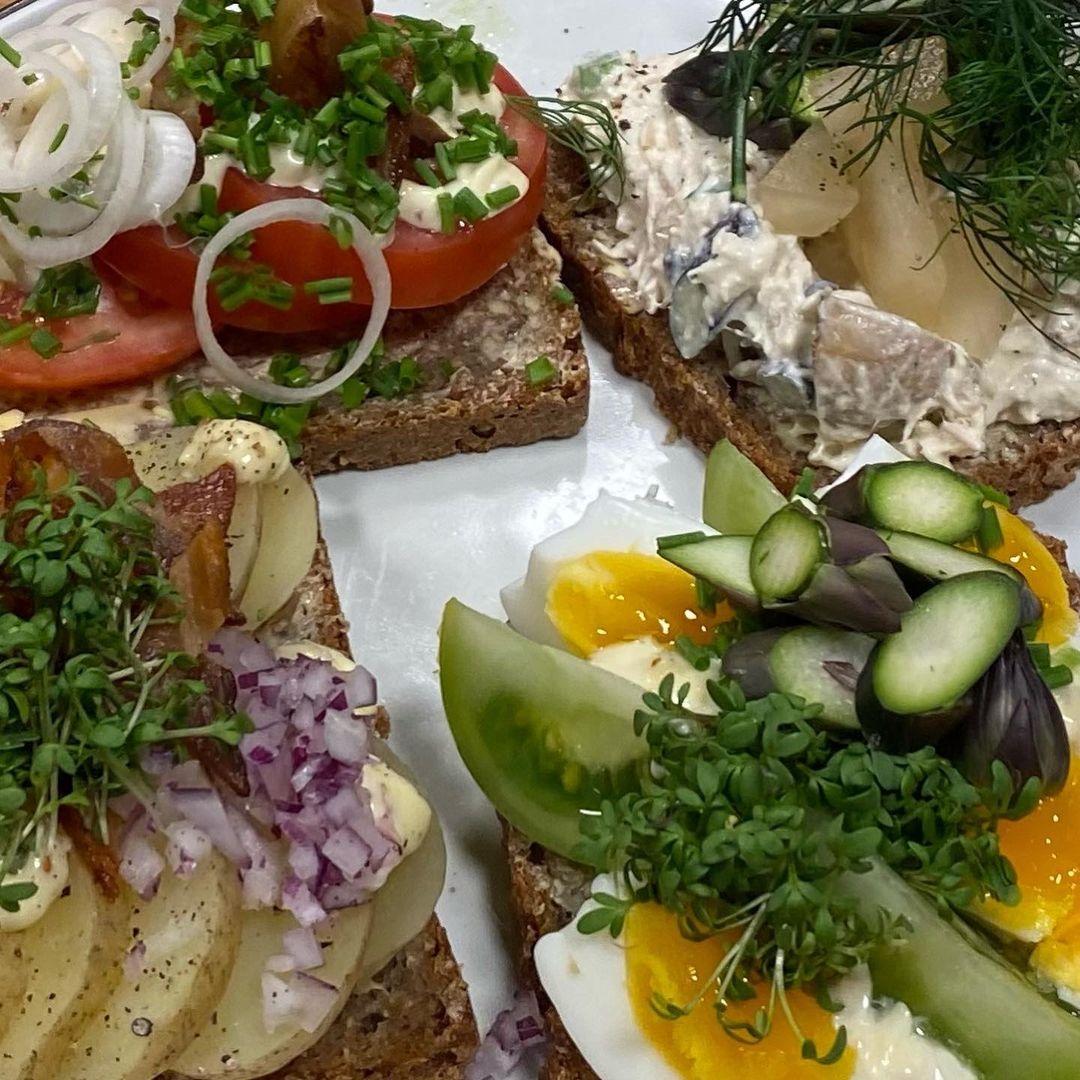


She showed me around her café, bakery and truly sensational selection of baked goods – cakes, pastries and breads, all made from 100% organic ingredients.


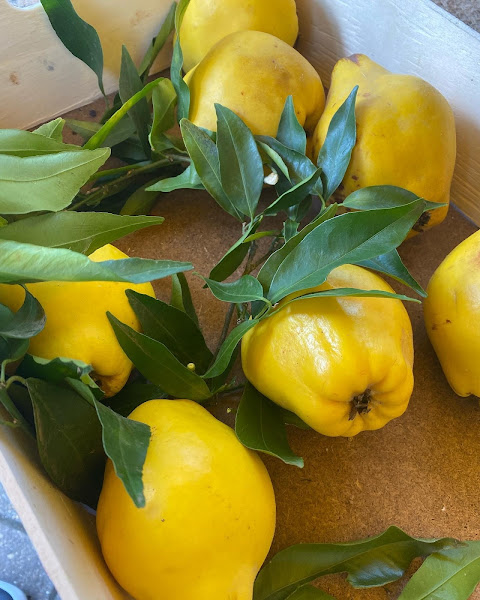
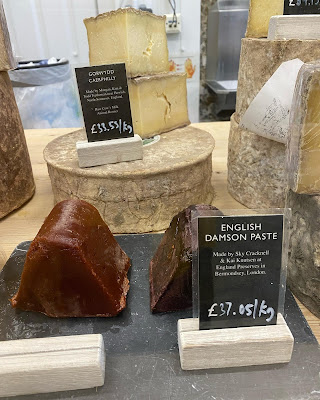
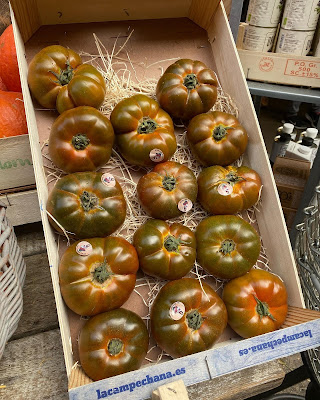
It was also wonderful to get a chance to visit my dear friend Camilla Plum at her beautiful home.




Friday, 17 June 2022

A Food-lover's Guide to London


Just had a ‘delicious’ long weekend in London. I'd forgotten how much I missed London and how much fun and excitement one can cram into a few days in one of the most exciting and innovative food cities in the world.

The Thursday evening flight from Cork Airport. (Am I biased or is it the friendliest little airport in the world?) brought us into London in time to have dinner at Quo Vadis on Dean Street, I love Jeremy Lee's food and there's no deafening music in the dining room. Right next door is Barrafina, another of my favourite restaurants and is a must if you don't mind queuing.


I love to wander through a Farmers' Market on Saturday mornings. You could and should visit Borough Market particularly if you haven't been before. But I headed for Maltby Street Market under the railway arches and made my way through the little passages to Spa Terminus to find some of the very best ingredients in London - Neal's Yard Dairy and Mons for best artisan cheese, exceptional salami and cured meats @HamandCheese, fruit and veg @Natoora, honey, jams, beers, fantastic bread and pastries @DustyKnuckle pop-up. Pick up a custard doughnut @StJohn’s Bakery and coffee @Monmouth. Both 40 Maltby St. Wine Bar and Flor are still not doing dine-in but you can pick up a picnic or takeout.


Then into a cab over to Brawn in Shoreditch, located at the end of Columbia Rd for a superb (and I don't use that word lightly) lunch. Wesley, the maître d' of 7 years is from Cork so we got a warm Cork welcome.

Oren in Dalston is one of the names on all 'foodies' top recommendations at present, a wide Mediterranean menu and ear-splitting music but many delicious middle-eastern influences. Put Dishoom on your list too. We went to the Derry Street location in Kensington, an art deco mecca. There are many, many good things on the menu but don't miss the iconic Bacon Naan, reminiscent of the Iranian cafés in Mumbai, street food at its irresistible best. 

We had lunch at Café Cecilia, Max Rocha’s hopping new restaurant in Hackney, just across the road from Regent's Canal. It and Fallow on 2 St. James's Market where we had dinner are the hottest tickets in town and it certainly didn't disappoint. I particularly loved the calcots with romesco and the deep-fried bread and butter pudding. Haven't even mentioned the shops but this is a food blog! Fortnum and Mason is just opposite the Royal Academy of Art so worth wandering into - just saying!


If you are in Kensington High St, check out Sally Clarke’s lovely restaurant and food shop... and on and on it goes...Café Deco is definitely on the list for my next trip, brilliant reports.

Friday, 3 June 2022

Morocco Revisited

Morocco is mesmerising, the closest country where the culture is intriguingly different. So tempting for those craving a change after almost two years of isolation - barely 3 1/2 hours by plane and 1-hour time change…


Where to go? Castleblanca, Rabat, Fez, Essaouira, Tangiers…The latter though charming is still pretty nippy at this time of the year, so how about Marrakech with its date palms and cactus, souks and bazaars and the incomparable Jemaa el-Fnaa square in the heart of the medina, a magnet for both Moroccans and visitors flocking to be fed, watered and entertained. Drink freshly squeezed juices (no alcohol) and watch hypnotic musicians like swirling dervishes, swirling jugglers, snake charmers… Have a pic taken with a monkey on your shoulder or with colourful tea sellers who make more money from having photos taken than by selling tea. Donkeys weave in and out through the narrow lanes of the medina with carts full of oranges.
There are henna artists, soothsayers, a frenzy of merchants selling their wares from sparklers and balloons to little bowls of snails in broth and a selection of false teeth should you need them... At night, local cooks and chefs set up long tables on the side of the square selling steaming bowls of harira with fresh dates, grilled fish, tagines, every conceivable type of offal. A wonderfully convivial experience and the food overall is above average.
But my absolute favourite is mechoi, the meltingly tender milk-fed lamb, cooked slowly for hours in underground clay ovens until the succulent meat is virtually falling off the bones. You’ll find it from noon to about 4pm along Mechoi Alley – a little lane on the east side of the square. Look out for Haj Mustapha, he was the last Hassan’s (Kings) private chef who now owns Chez Lamine and several stalls selling not just mechoi but also goat’s heads, and tangia, a lamb stew in a clay pot, traditionally cooked in the ashes of the fire that heats the water for the hammans. I even tasted karaein – cow’s hooves with chickpeas. Been there, done that – don’t need to do it again…

The medieval city of Marrakech with its ten kilometres of ochre coloured adobe, ramparts and seven awe-inspiring ornamental gates has many landmarks. The minarat of the Koutoubia Mosque dominates the city. Like most mosques in Morocco, it’s closed to non-muslims but is still a mightily impressive building.

Marrakech was the destination for merchants, camel traders and caravans who had crossed the desert and the snow-capped Atlas mountains with their wares. It’s steeped in history…and if you only eat in one restaurant, it has to be Al Fassia, the women’s restaurant in Gueliz and how about Al Baraka, a petrol station on Rue de Fez, about 15 minutes outside Marrakech – inexpensive but delicious food.
The highlight of my trip was a morning food tour with Plan-It Morocco. And even though I’ve been to Marrakech many times, I discovered many new places with Bilal, my deeply knowledgeable guide. We started at the Kasbah, originally a posh neighbourhood close to the royal palace, now a commercial area with lots of little shops, bakeries and stalls. First stop - a little stall selling sfeng, the famous deep-fried breakfast doughnuts eaten plain or sometimes with an egg in the centre and a sprinkling of crunchy sea salt and cumin. Actually these doughnuts are served all day but are sprinkled with sugar in the afternoon. We wandered through the narrow alleys and watched women making a variety of different breads. Every neighbourhood has an underground wood-fired oven which doubles up as a community bakery. Women bake traditional round flat breads in their homes, lay them on a cloth covered board to rise. It’s bought through the streets to be baked in the oven when the baker has finished cooking his daily loaves. In Morocco, there are more than seven types of Moroccan bread – all delicious. 
Stalls were piled high with beautiful fresh vegetables and fruit, I watched a beautiful old lady in a patterned black and white kaftan removing the fibres from long cardoon stalks. First with a knife and then a coarse nylon brush. I bought a bag back to Tarabel Riad and asked the cook to prepare them for my dinner in a delicious tagine of cardoons and potatoes.

In the Jewish quarter, we sat at a little tin table to have another traditional Moroccan breakfast - Bissara, a thick bean soup sprinkled with cumin and chilli pepper, drizzled with olive oil. It comes with a basket of bread for dipping.

I could write several blogposts on the bread alone.

On past the once famous Sugar Market to watch the warka makers working at the speed of knots, dabbing the dough onto hot saucepan lids over boiling water to make the paper-thin sheets of warka used for chicken and pigeon pastilla and a myriad of other pastries.

Next stop, Belkabir, the most famous pastry shop in the medina with 40 or more sticky sugar laden pastries from horns de gazelle to briwat (triangle shaped pastries filled with marzipan, deep-fried and dipped in honey).
We continued to meander through the souks, with its stalls piled high with everything from Moroccan slippers, fake bags and ‘designer’ clothes, metal work, hand carved wooden spoons and boards, brassy trinkets, hand blown glass…and finally into a little secret corner called Talaa, to Chez Rashid, a favourite haunt of the locals. I loved their sardine ‘meat balls’ with cumin and coriander – so delicious with chopped raw onion or with tomato sauce.

We continued to walk through the souk – then back to the beautiful Tarabel Riad where Kahil picked oranges from the trees in the inner courtyard to make some freshly squeezed orange juice to quench my thirst…Sure where would you get it but in lovely Morocco.


Sunday, 16 January 2022

A Return to India


Last year our Indian holiday had to be cancelled for all the reasons we are now familiar with, so rather than ask for a refund, we deferred our booking for 12 months so we had something really to look forward to throughout the ups and downs of the last year.

In November 2021, India reopened for travel and one could get a month-long visa so rather than hop from one place to another, we decided to go directly to
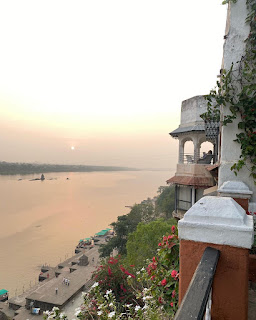
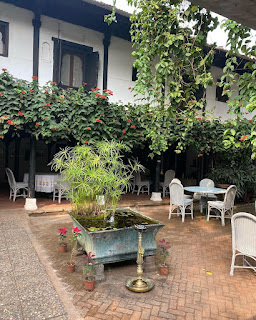
Ahilya Fort, an enchanting heritage property perched high above the sacred Narmada River in Maheshwar where there’s always a gentle breeze.

It’s quite a mission to get there, Cork to Amsterdam and onto Delhi and then a domestic flight to Indore. A driver from the hotel welcomes you at the airport with a picnic to sustain you for the almost two-hour journey to the exquisitely restored fort, originally the home of Ahilya Bai, the warrior Queen who ruled Indore from 1765 – 1796.  

The driving force behind the restoration project was Prince Richard Holkar, descendant of Queen Ahilya Bai. He and his original wife Sally Holkar also re-established the almost extinct hand weaving industry for which Maheshwar was justly famous and is now once again thriving. Women now come from all over India to choose a much-coveted Maheshwar silk sari.


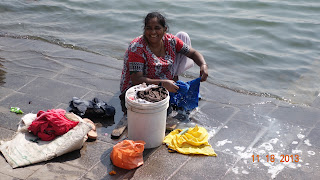
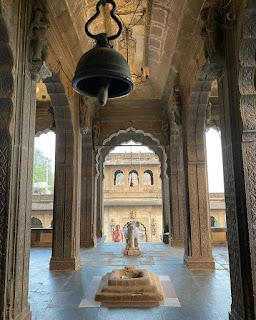
The balcony of our bedroom overlooked the ghats (steps), temples and chattris on the riverbank where there is endless activity from sunrise to sunset. It’s a riot of colour. Before dawn, local women come to wash their clothes in the river. Hundreds of pilgrims, some of whom have walked for over 150kms with their little bundle of possessions, pour onto the ghats to perform their pujas and bathe in the sacred river to wash away their sins.


Others chant, sing, pray… Children fly homemade kites, feed the sacred river fish and sell brightly coloured baubles to Indian tourists on day trips…There’s street food galore, poha, pingers, poppodums, sugar cane juice, guavas…The women bathe in their beautiful saris and then spread them out on the ghats to dry...

Little boats, all gaily painted, ferry devotees backwards and forwards across the km wide river to the myriad of temples on both riverbanks…From the poorest to the most affluent…everyone is so devout…it's incredibly moving.

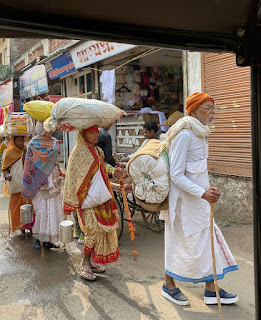
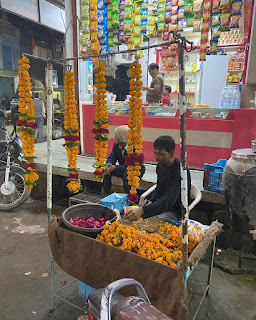
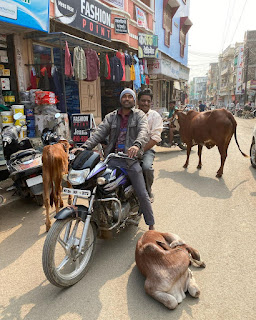
The little town is bustling with activity too, lots of tiny shops, selling everything from garlands of marigolds and roses to embellish the Gods or welcome visitors. Intriguing hardware shops, tailors busy on their Singer sewing machines, jewellers hand beating silver, stalls piled high with spanking fresh vegetables and fruit, bananas, carrots, water chestnuts, papayas, watermelons, pomegranates… 

A host of Indian sweets and namkeen shops. Halfway downtown, close to the ATM machine, there’s a barber with an open-air shop front trimming hair, beards and soaping up chins ready for shaving. Around the corner, a man meticulously irons piles of clothes with a big heavy iron like one might find in an antique shop. 

Others sell colourful pictures of the Indian Gods, incense and much sought-after Shiva lingam from the river, and other essentials for puja’s (special prayers) – so beautiful and intriguing, it’s like walking through a Bollywood movie…

From early morning to late at night, the air is fragrant with the smell of food from the numerous street stalls, katchori, pakoras, bright orange jalebi, poha, robori and a wonderful fluffy saffron milk bubbling in a large kari (iron wok). 

By now you can tell that I love India. Everyday there’s another adventure, somewhere new to explore.

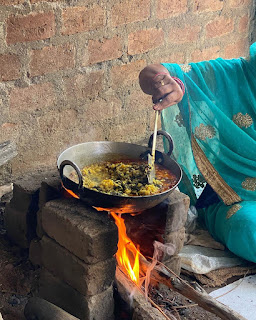
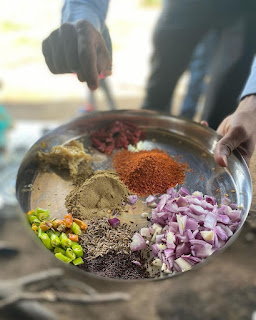
I had several wonderful cooking classes in Indian homes, usually from grandmothers who still do everything from scratch and cook over an open fire with wood and dried cow dung patties. The latter may sound very strange to us but in fact, it’s very common in rural India. 

Food cooked over dried dung fires tastes delicious. They don’t smell at all, it’s a brilliant way of recycling and Guess What…you can buy Indian cow patties (gotha) via Amazon! They are also used in some religious ceremonies.

How about the food at Ahilya Fort?

All meals are included in the room rate plus afternoon tea and non-alcoholic cocktails from 7-8pm. Much of the produce is home-grown in the organic gardens, on the farm or comes beautifully fresh from local markets.

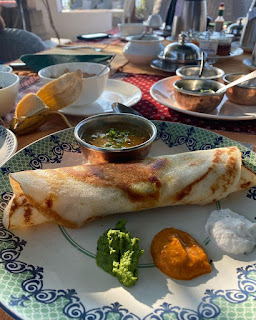
Memorable, long lazy breakfasts with deliciously ripe fresh fruit and juices, homemade yoghurt (curd), jams made by Prince Richard Holkar himself, freshly baked breads…I made kumquat marmalade from the fruit in the garden and picked the lemons from the lemon tree to make a zesty lemon curd. There’s an Indian speciality every day, dosa with sambal, idli, uppam, masala omelette or Maheshwari scrambled eggs…

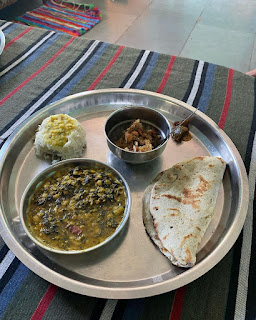
Lunch is mostly western vegetarian food but for dinner a different Thali every night, with 6 or 7 little bowls of delicious Indian food and fresh crunchy vegetables with a segment of lime and salt.

Some of the recipes come from Prince Richard Holkar’s book, the Food of the Maharajas, others have been brought to Ahilya Fort by the cooks from their family homes.


Monday, 20 September 2021

Inis Meáin

I’ve just eaten a delicious mouthful of dill pickled herring with cream cheese on a slice of freshly baked soda bread for breakfast – sublime... I’m back on Inis Meáin for the second time this Summer, how fortunate are we to have benefited from the misfortune of some other guests who couldn’t take up their booking at Inis Meáin Suites. There are just five rooms so one feels super fortunate.

Image: https://beaumondetraveler.com/content/aran-islands-in-ireland/

Our bedroom overlooks the extraordinary Inis Meáin landscape, little fields surrounded by high dry stone walls, a few cattle here and there, Coilumin’s rectangular garden along the road is bursting with cabbages, ripe onions, beets, rhubarb, potatoes…He has harvested the rye since the last time we were here, tied it in sheaves, threshed it against a standing stone on the limestone pavement below his field. He’ll save the precious seed for next year’s crop and the long straw can be used for thatching, I wondered if he made rye bread but apparently it’s not part of the island tradition.

On a fine day, one can see across Galway Bay to the 12 Pins, and the Clare coast to the south but this morning, a thick mist is swirling in from the sea, enveloping the white washed buildings of the Inis Meáin Knitwear factory. It’s a hive of activity around the clock, lovingly turning out the most beautiful knitwear from the finest wool, cashmere, linen and cotton yarns for export to a few carefully chosen shops around the world.

The fluffy grey mist ebbs and flows and I can’t help being secretly pleased that it’s likely that our flight to the mainland in the tiny Aer Arann plane will be somewhat delayed…so I can relax and enjoy a leisurely breakfast.

So let me tell you about this delicious repast – Breakfast at Inis Meáin Suites is no ordinary breakfast. It’s delivered into the bedroom porch in a handmade iroko timber box tray around 8.30am ish. Lift off the lid, inside you’ll find a feast… 10-12 little jars and Bec containers are tucked into thick polystyrene moulds…freshly squeezed orange or apple juice, homemade granola, seasonal fresh fruit, thick unctuous yoghurt... There are several slices of both brown and white soda bread tucked into a little box beside two slices of poppy seed banana bread. Two fresh hard-boiled eggs from their little flock of happy hens are covered in little hand knit Aran egg cosies – how cute and practical is that! But that’s not all, there’s also a little pot of pickled herrings and a gutsy liver pâté and just in case we have a craving – two little pots of the most sublime chocolate mousse I’ve ever tasted with a pot of crème fraîche. We made a pot of coffee from the freshly ground beans. There’s a minimum two night stay, and other choices for breakfast the next day.

Each room comes with walking sticks, two bikes, fishing rods, two deck chairs and lest you need it, an umbrella. Wandering or cycling around the island is a joy, fields full of wild flowers…hare bells, fuchsia, loosestrife, heather, honeysuckle… A few cattle here and there and there’s certainly one donkey and maybe more. Don’t miss the Harry Clarke’s stained glass windows in the chapel of Saint John and Immaculate Mary. Check if Millington Synge’s little thatched cottage is open and climb up the steps to at least one of the stone forts. You’ll probably be alone to ponder how these extraordinary ruins were built between 2,000 and 3,000 years ago…

Inis Meáin is possibly the quietest and the least visited of the three Aran Islands – there’s one shop and one pub with lots of outdoor seating. Depending on the time of the year, there’s one or two cafés and a quirky craft shop but don’t leave the island without visiting Inis Meáin Knitwear. No ‘fast fashion’ here – beautifully crafted pieces that you’ll treasure for a lifetime…

I almost forgot to mention dinner, always a surprise – Ruairí de Blacam’s food reflects seasonal organic produce from their garden and polytunnel, fresh catch of fish and shellfish from local fishers and occasionally wild and foraged food from the island. The wine list chosen by Ruairí’s wife Marie-Thérèse is also exceptional. This place is one of Ireland’s hidden gems, check it out and put your name on a cancellation list – www.inismeain.com

Tuesday, 20 July 2021

Aeolian Dreams

I am just longing to jump on a plane and spend a few days in Greece or puttering around the Aeolian Islands. Imagine those clear skies and azure blue seas and little tavernas by the seas with spanking fresh grilled fish, sizzling saganaki, a freshly chopped Greek salad - gorgeous sunny Summer food. I've never been to Greece in Winter but I also love those rich bean soups, lamb and beef stifados, and an occasional pork or wild boar and butter bean stew...

The closest I'll come to that in the near future is a trip down memory lane with Rosemary Barron's Flavours of Greece, originally published in 1991 but it has never gone out of print and has recently been republished by Grub Street.

Many books have been written on Greek food since then but Rosemary's book is still considered to be the most authentic and authoritative collection of Greek recipes.
In the 1980’s, Rosemary owned a cooking school in a 450 year old village house on the island of Crete, the first of its kind in Greece and described by Vogue as one of the best cooking schools in Europe. Her recent courses on Santorini explore the foods and flavours of Greek antiquity.

Greek summer dishes are just the sort of food I am loving at present. A selection of mezze to set taste buds tingling.

Mezze can be a simple or an elaborate selection, so easy to put
 together – 5 to 25 dishes...marinated Kalamata olives, chunks of feta or kefalotiri cheese, radishes, toasted salted almonds, taramasalata, hummus, broad beans, aubergine in many guises, spanakopittas (little filo pastry pies) stuffed with meat, vegetables or cheese, peppered figs, dolma wrapped in grape leaves, octopus, smoked eel, tiny fried fish....serve with lots of pitta or flat bread and a glass of crisp Greek wine. I’m also dreaming of Avgolemono - a delicate and comforting chicken and rice soup, light and refreshing for Summer evenings. 

I can virtually smell Souvlaki – chunks of pork marinated with juniper and coriander, a dash of red wine and lots of garlic and oregano charring over the charcoal…
Grilled Kephtedes (spicy beef and lamb patties) are also irresistible with a dollop of Tsatsiki and of course a Greek Salad - chunks of sweet ripe tomato, cucumber and spring onion dressed with gutsy Greek olive oil and freshly squeezed lemon juice. (Try making your own using one of my favourite recipes.)

A quick aside on marjoram and oregano, as there seems to be considerable confusion between them. There are several different forms: Common marjoram is a perennial, it re-emerges every year, but annual marjoram has an infinitely superior flavour and is closest to the Greek oregano. (see photograph). Annual marjoram, also known as knotty marjoram is closest in flavour to the Greek oregano. 

Follow with a platter of deliciously ripe
 fresh summer fruit and berries on a 
bed of fig or grape leaves served with some Mizithra cheese and Hymettus honey - divine.

Simple as it sounds, it can be very difficult to reproduce here in Ireland when it's so difficult to find ripe figs and stone fruit in summer but a platter of ripe fresh local berries would be sublime if you can find them.