Showing posts with label organic growing. Show all posts

Monday, 6 December 2021

The Most Important Day of the Year


World Soil Day falls on December the 6th this year.  For me it’s the most important day of the year – perhaps that sounds as if I’ve gone slightly dotty but it’s really good to remind ourselves that we are all totally dependent on the four or five inches of topsoil around the world for our very existence. Our health and over 90% of our food comes from the soil.  If we don’t have rich fertile soil we won’t have clean water or good food – think about it…!  Soil also plays a vital role in regulating the climate and supporting animal and plant biodiversity.
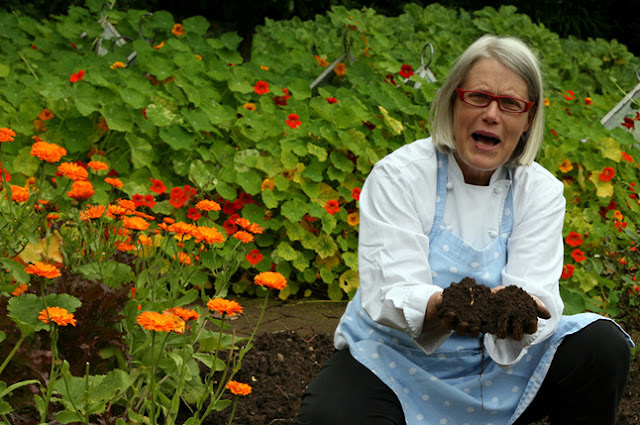
In the words of Lady Eve Balfour: “The health of soil, plant, animal and man is one and indivisible” and the ominous warning from Franklin D Roosevelt – 32nd President of USA that “The nation that destroys its soil, destroys itself” - how prophetic was that!

Here in Ireland, we have little reason to be complacent - only 10% of Irish soil is at optimum fertility.  According the Teagasc that means 90% of Irish soil is mineral deficient mainly as a consequence of overuse of artificial nitrogen, synthetic fertilisers, pesticides and herbicides which damage the soil and the earthworm population.

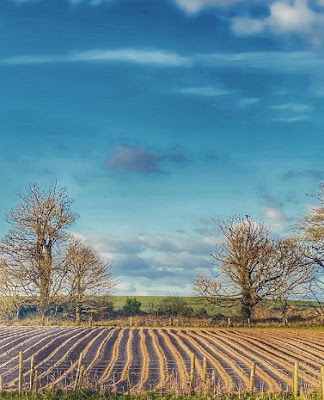
Soils are a limited natural resource; their formation occurs at an extremely slow pace.   At the very least, it takes 100 years to build an inch of topsoil but can in fact take 500 years or more.  Most current food production methods do not nurture the soil, instead they exploit it.  There is a growing realisation among the farming community that we can no longer continue with ‘business as usual’ for a myriad of reasons not least the diminishing nutrient content of our food.  The move by many farmers to regenerative farming as a means of improving soils, increasing biodiversity and mitigating climate change is to be welcomed. 

I’m intrigued by the soil.  Soil scientists confirm that there are more microbes, enzymes, protozoa and nematodes in a teaspoon of healthy soil than people on earth but there is so much, still to understand.  If I ‘come back again’, I want to be a soil scientist…  

As organic farmers, we are passionate about the soil.  We continue to build fertility by adding well-rotted farmyard manure, compost, humus, seaweed and even seashells.  Regular soil testing monitors progress.  We eagerly await the introduction of a spectrometer that can measure the nutrient density of food so farmers who produce more nutrient dense food can be paid properly for the extra nourishment their food provides.  That could surely be a game-changer.  It’s not difficult to calculate that someone along the food chain is losing out when a bunch of carrots which takes at least four months to grow from seed are sold for 46 cent.  Despite economies of scale, if this continues there will be no Irish vegetable growers within a few years – they simply cannot any longer continue to produce vegetables below an economic level.  In the words of one farmer ‘we would probably be paid more for stacking shelves in the supermarket’.  This can’t go on – check out the brilliant French initiative C’est qui le Patron (@cestquilepatron_ on Instagram) where the consumer gets the option to pay more having being told the story behind the production of that litre of milk, loaf of bread, carton of eggs…
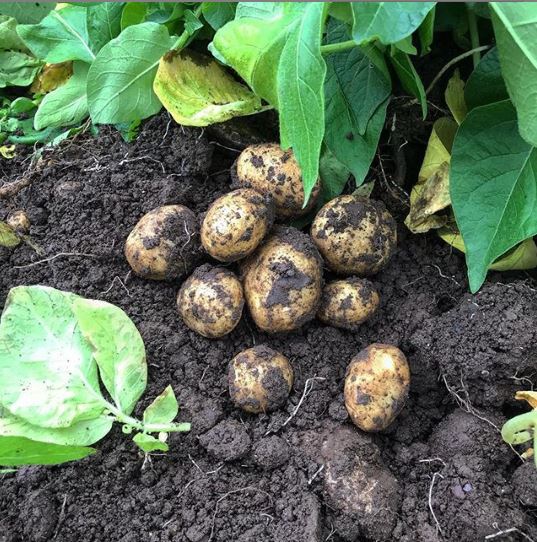

Delicious, nutrient dense, wholesome food that helps to build a strong immune system and boosts our antibodies comes from rich fertile soil not from labs and test kitchens.

Monday, 25 May 2020

Sustainability


Sustainability - what could be more timely? But for many of us the word sustainability is confusing and has many interpretations. A loose definition of sustainable agriculture might be - farming in sustainable ways which meet societies present food requirements without damaging the environment or compromising the ability for current or future generations to meet their needs.

The past few weeks have amongst many other things, given us a badly needed opportunity to press the Pause Button in our busy lives. I suppose it must be my imagination that Spring and early Summer 2020 was the most beautiful ever. The birds are singing their little hearts out to cheer us up…everything on the farm and in the gardens is green, vibrant and blossoming. Mother Nature seems to be compensating for our misery and despair and reminding us that, given half a chance, she will provide abundance for us. Even in this short time, changes in human behaviour have benefited the planet - quieter skies, clearer water, cleaner air, healthier nature, bird and insect populations increasing…

We can’t stay in ‘lockdown’ forever but we now know that we can make massive, rapid changes when we adapt the ways we work and live. When this terrible pandemic is over, we have a chance to change our behaviour to offer a secure future, and survivable temperatures to our children and grandchildren, and we MUST. For years now we have heard and largely ignored the scientists and climatologists predictions. We could scarcely comprehend the scale of the threat to the planet and future generations….even if we could absorb the seriousness of the situation, many felt helpless -  It was virtually impossible to believe that Governments and vested interests would ‘step up to the plate’ to implement the changes that needed to be made. Nothing but the Covid 19 enforced change could have achieved so much in such a short time. The pandemic should not have come as such a surprise, something of this magnitude was predicted over and over again, not least by Nostradamus, in Aboriginal Lore and by scientists, yet many Governments failed to listen and prepare.

As the planet became more and more polluted, causing almost irreversible climate change, extreme weather conditions - floods, tornados, cyclones, hurricanes… We were too distracted and growth obsessed at any price to notice. Food became increasingly less nourishing, compromising our health and immune systems so we are less and less able to survive the increasing number of viruses that are challenging our systems.


I know I’m like a broken record but surely it must now be beyond obvious that there is an urgent need to re-embed practical cooking and other life skills, including growing food into the national and secondary school curriculum.  No Irish child, boy or girl, must ever again be awarded a Leaving Certificate without being able to prove they can cook for themselves. Otherwise, we are undeniably, failing in our duty of care to our young people, as many helpless 20, 30 and 40 year olds have realised to their cost in the past couple of months.
So how do we practice sustainability in our everyday lives? Once we start to think that way there are a myriad of opportunities. We can make a huge contribution in the way we choose to spend our food euro. Think about each and every item we put into our shopping baskets – really focus on supporting local producers and small businesses as much as possible. Let’s ask ourselves a few basic questions -  Is it in season, does it’s production damage the environment, is it properly nourishing, are the producers being paid a fair price, how about animal welfare,  packaging….After all that am I buying more than I need? Let’s work towards zero waste in every aspect of our lives?

Start to grow some of our own food, even if it’s just a few salad leaves on a windowsill – you can’t imagine the joy and satisfaction…Realize that it’s worth paying a little more for chemical free food – after all it’s surely better to be proactive and invest in our food as medicine rather than paying for meds and food supplements - let’s be proactive. 

Monday, 29 April 2019

Meat-Free Mondays

Big fuss on Prime Time recently when An Taisce’s Green Schools Programme with support from the National Climate Change Action and Awareness Programme recommended that schools implement ‘Meatless Mondays’ and encourage children to eat less meat and dairy. The IFA were up in arms and the ensuing debate only served to confuse viewers even further.

So what to do…? There’s no denying climate change, it’s a blatantly obvious reality in all our lives and each and every one of us has a responsibility to play our part to mitigate it in our own little way. Cooks and chefs can combat climate change by actively sourcing their product from farmers and food producers who farm sustainably in harmony with nature and by working towards a zero waste policy. The same principals apply to the rest of us, but back to the furore. The farming community overall are responding positively to the challenge and are doing their best to move to more sustainable farming systems but meanwhile there’s nothing to be gained from ‘shooting the messenger’. Best to concentrate on producing the very best meat and dairy products, delicious, nutrient dense food that consumers can truly trust: grass-fed, chemical-free and free from residues of antibiotics. I’m often asked what exactly is the definition of grass-fed? Difficult to get an answer…
Nonetheless, whether we like it or not it’s time to accept that reduced meat consumption is a trend that is definitely here to stay. Note that multi millions of dollars are being invested in the meat substitute industry. That is not going to change anytime soon so let’s put our efforts here in Ireland into producing REAL quality not quantity and charge enough for it. One can of course be super healthy on a vegetarian diet provided one can source nutrient dense organic vegetables and grains.
I myself am, what’s nowadays termed as a flexitarian and a very happy one at that. I love vegetarian dishes and also eat lots of ‘accidently vegan’ food but love good meat, poultry and fish. However I’m super careful about the quality of the meat and fish I eat. I go to considerable lengths to source organic, free range chicken – considerably more expensive but cheaper in the end because I can get six meals from one plump chicken and a fine pot of broth which in itself is ‘super food’. I also try to find lamb from a local butcher who can find a sheep farmer who finishes his lambs on grass rather than concentrates, the difference in the sweetness of the meat is palpable.
I search for beef from our native breeds, Hereford, Aberdeen Angus, Poll Angus, Shorthorn, Dexter or Moilie. I’m looking for a rich beefy flavor when I enjoy a small steak, a stew and indeed the crucially important offal or organ meats as they are referred to by the excellent Weston A. Price Foundation, whose Wise Traditions podcasts and guidelines for optimum nutrition are worth checking out. 
However, it’s really important to remember our farmers who labour day in day to produce the food that nourishes us… Many are having a really tough time at present, struggling to meet the challenges coming from all directions – the uncertainty caused by Brexit, rising production costs coupled with lower and lower prices at farm gate as the supermarkets force the prices ever lower to provide their customers with cheaper and cheaper food.
We urgently need ‘true cost accountancy’ so consumers understand that cheap food is a myth in health terms and socioeconomic terms. As tax payers we pay many times over to provide subsidies to support what are in many instances unsustainable systems, to clean up the environment, and our rivers and lakes and to fund the health service.
So the real price of the item is invariably 4 or 5 times the price on the shelf. The biggest threat to our health and food security is the low price of food at the farm gate. Farmers, particularly small farmers, are leaving the land in droves all over the world, sad and disheartened because they simply cannot produce the nourishing wholesome food, we say we want for the price they are being paid for it. We are sleepwalking into a gargantuan crisis. The non-farming communities  are generally unaware that farmers are fortunate to get 1/3 of the retail price and lucky to be paid months later. What other section is expected to sell their product or services below an economic level and survive?
I happen to believe that dairy products and good meat and fish are vitally important elements in our children’s diets and am a great fan of butter and organic raw milk from a small dairy herd. It’s interesting to note that the demand for raw milk is growing steadily as people become aware of its extra nutritional elements and flavour. Despite the perception, it is not illegal to sell raw milk in Ireland, it is available at several Farmers Markets and small shops. Check out Mahon Point Farmers Market, Midleton Farmers Market and Neighbourfood to name a few…

Monday, 27 August 2018

Edible Flowers


Cornflowers, primroses, forget-me-nots, day lilies, marigolds, roses, lavender, nasturtiums, dahlias, chrysanthemum


I love to scatter flower petals over desserts, cakes and biscuits. Judiciously used they also add a little magic to starter plates and salads. Of course the flowers must be edible but a wide variety of blossoms are, as well as the flowers of broad beans, scarlet runners, sun chokes, peas and sea kale, but remember they will  eventually grow into the vegetables so pick sparingly.

The canary yellow zucchini and squash blossoms are also irresistible not just to tear into salads but also to dip into a tempura batter - stuffed or unstuffed.

Image result for ballymaloe cookery school edible flowers

Even the cheery little nasturtium flower with its peppery taste are both cute and delicious stuffed with a little herby cream cheese. We also chop the gaily coloured nasturtium blossom and add them into a lemony butter to serve with a piece of spanking fresh fish.

Fennell and dill flowers have a delicious liquoricey, aniseed flavour. They too add magic to fish dishes and broths but also to some pastas and of course salads.

crab toasts
Image from one of our 12 week students: http://themarkettableblog.com

Dahlia flowers are gorgeous sprinkled over salads, I particularly love them scattered over an heirloom tomato or potato salad.

Thyme flowers are various shades of blue and purple – we love to use them to garnish little pots of pate or to sprinkle over a bowl of silky onion and thyme leaf soup.
Sage and hyssop flowers are even more intensely blue and they two give a vibrant and perky flavour to salads and summer vegetable dishes.
The kombuchas and water kefirs that we serve at the school every day also include edible flowers which introduce the yeast of the area into the gut enhancing drink.


Friday, 3 February 2017

GIY HQ

It's spring again and the 12-week course is in full swing - 13 nationalities this time. Dark and dreary when they arrived, but now the evenings are getting longer and the birds are singing and snowdrops, crocus and tiny daffodils are bursting in flower. For the past few weeks I've spent many cosy evenings by the fire flicking through seed catalogues, choosing varieties of vegetables, fruit and herbs to plant during the coming season. I can't wait for the ground to warm up enough to get some seeds planted. Our 12-Week Certificate students are equally impatient to get started. On the first day when they arrived, we showed them how to sow a seed and then gave them a lettuce seedling to plant into the ground so we've whetted their appetite to think about growing some of their own food. 

Every now and then one comes across a natural leader, a person with an impossible vision who has the tenacity and charisma to make their vision a reality against all the odds. Michael Kelly, founder of GIY Ireland is certainly such a person and it can be a tiny incident that sparks an idea – this whole movement which supports the growing efforts of 150,000 people and 6,000 food communities both in Ireland and the UK, all started with garlic.


Michael Kelly (Image Credit Ilovecooking.ie)
Michael was busily doing the food shopping one dark evening, not his favourite task, he picked up a bulb of garlic – 50 cents, he was outraged to discover that it had come ‘all the way from China’.
It set him thinking surely to goodness we could grow garlic in this country.
Out of this outrage was born, what is now one of the most important social grass roots movements in the country: GIY – Grow It Yourself. 

Michael shared his discovery with some of his friends; they decided to arrange a meeting to ‘test the waters’. Did others feel the same? Was there any interest in this topic? Was there a hunger for knowledge? Over 100 people turned up to the initial meeting in the Waterford Library one September evening in 2008, standing room only – obviously there was an appetite to learn what for some was a ‘forgotten skill’ for others a longed for skill to learn how to sow a seed and grow even a little of their own food.
Michael had inadvertently stumbled upon a longing, among a significant number of people to discover the magic of sowing a seed and having the satisfaction of watching it grow into something they could eat and feed to their families in the secure knowledge that it was nourishing, wholesome and free of chemicals. Since that small beginning in 2008, Michael and his messianic team many of whom have soldered by his side voluntarily since the very beginning has travelled up and down the country starting branches, organised eight
GIY Gathering Conferences in Waterford, supported over 6,000 local champions, inspired and encouraged and continued to dream.
Michael was invited to deliver a DO lecture in Wales in 2012, during that event he became even more aware that the movement needed a headquarters, a centre where people could visit, see edible gardens bursting with vegetables, herbs and fruit, learn how to grow, eat and gather together to share the fresh seasonal food from the garden.
On the ferry boat back, he scribbled a ‘note to self’ on his pad – ‘must do, GIY HQ’ and stepped off the boat at Rosslare with an enhanced mission.
He shared his vision, it resonated with many people.
A vision is one thing, but raising €1.4 million to realise that vision is quite another – a massive fund raising campaign ensued over 4 years and on 8th October, GIY HQ was opened to a joyous reception from hundreds of supporters, well-wishers and local businesses and the passionate GIY team. It’s rare enough to find a work force so totally committed to an ideal as the group of twenty six super charged individuals who are overjoyed to be part of this project.


Michael outside Grow HQ (Image Credit - Waterford in your Pocket)

Michael thanked the myriad of people who had helped and supported his vision along the way but reserved extra special mention for Waterford County Council who had unanimously voted to donate the 3 acre site at Farronshoneen on Dunmore Road opposite the University Waterford Hospital and the Solas Centre to GIY.


Myself and Rory with Michael at the opening. 
The sustainable building on was designed by Solearth Architecture and encompasses class room, café, shop and cooking school –and now the work really begins. Check out the Grow HQ website... and come and see him at this year's Litfest in May, at Ballymaloe.


Wednesday, 14 August 2013

Ballymaloe Garden Festival - Win a Day Pass!

It's such a beautiful time of the year. The gardens and greenhouses are just so lovely at the moment. I know it sounds like a cliche, but when I walk around, I just can't help but give thanks to the good Lord that I live in the middle of a farm and that we have the opportunity to grow and produce so much of our own produce.

Inspired and buoyed up the success of  Lit Fest this May and the glorious summer we have been enjoying, we have decided to have our first Ballymaloe Garden Festival at the end of this month! We are, needless to say, both hugely excited, and incredibly busy, planning what we hope will be another magical event! Do read on for your chance to win a day pass!

Once again events will take place in both the Grainstore and Big Shed at Ballymaloe House, and here at the Cookery School in Shanagarry. So mark the weekend of August 31st in your diaries and join us - it looks to be an incredible line up, with many of my personal gardening heroes, gathered in our glorious surroundings. See the complete programme of events.

The festival is dedicated to sustainable gardening, and we are so excited to be welcoming so many inspiring experts to share their knowledge with us, ranging from rare plants to garden design, wetland systems, urban gardening and herbal medicine, through to flower arranging and cooking with flowers.

We are delighted to be welcoming back familiar names from Lit Fest. Guardian newspaper gardening columnist, author and presenter Alys Fowler will lead foraging walks through the gardens at Ballymaloe and Michael Kelly will inspire you to “Grow it Yourself”. Gerard Mullen, Bloom 2013 gold medal winner will talk garden design using our native materials. Helen Dillon, award winning creator of The Dillon Garden in Dublin, will speak about the evolution of her garden."The doyenne of the kitchen garden", Joy Larkcom will be speaking, as will Madeline McKeever of Brown Envelope Seeds, Jim Wilson from Irish wildlife, as well as our Ballymaloe crew -  myself, Rory O’Connell, Elizabeth O’Connell, and Susan Turner.
Click for a complete programme of events.

There will be workshops, garden walks and talks on composting; the almost forgotten skill of seed saving; foraging, preserving and pickling natures’ bounty; flower arranging with natural and native flowers; painting flowers in watercolour; wild birds, bees, butterflies and much more.

And if you want to explore our beautiful farm and gardens here at Ballymaloe Cookery School, there will be a free guided tour at 3pm on both days.

The Big Shed at Ballymaloe will once again be abloom with abundant plant, craft and food stalls. There will be music and fun fringe events for all the family.

Tickets for the events will be available on the day at the door and prices range from €8-12, and a number of them are free. Day passes, which cover entry to all events for €45 are available online now. 

ONE lucky person can win a DAY PASS for either Saturday OR Sunday. Just tell us below which day you want to come and why. We will choose our favourite answer at midday (BST) on Wednesday 21st August. Be sure to leave contact details (either email/ Facebook/ Twitter) with your answer.

For another great Garden Festival ticket giveaway do visit our local baking blogger, The Queen of Puddings.

We look forward to welcoming you!


Tuesday, 23 July 2013

Urban Farming

In the US something very interesting is happening, it’s virtually a grass roots revolution. However, it’s not just in the US, in cities all over the world people seem to feel a deep need to produce food locally once again. It seems to be an international phenomenon - an eerie almost primeval reaction as if deep down people sense that there may be a shortage of food before too long.


In fact, rooftop farming including backyard chickens and rooftop apiaries are now a major international urban trend. From Detroit to Tokyo, Rotterdam to Hong Kong, Montreal to Brooklyn, there are urban farming projects.


I first noticed the guerrilla garden movement on a visit to San Francisco about five years ago. Virtually every patch of waste ground or disused parking lot had been commandeered by eager gardeners who planted vegetables, herbs and salad leaves. Some shared their surplus with local shelters and sold the remainder from farm stands on the edge of the plot.


Since then I have visited numerous projects particularly in the US. From the Edible Schoolyard in Berkeley and the City Slicker Community Farms in Oakland California, to a two acre farm in the centre of Austin, Texas. Some projects are one man bands, others community based.


Recently, I went to New York to check out the urban farming movement. For the first time I began to get idea of the sheer scale, there are over 700 urban farms and gardens across New York City alone.

Last year, I visited Brooklyn Grange a two acre rooftop farm on top of a five story building on Northern Boulevard, New York, established in May 2010.

On a recent trip, I looked at a couple of other models, a branch of Brooklyn Grange at the Navy Yard, 65,000 square feet of vegetable beds on the top of an eleven story building. This project provides a livelihood for four people, employment for a further ten people and 30 apprentices plus a refugee training program. They sell their fresh produce from a farm stand outside the building and also have a CSA (Community Supported Agriculture) and make lots of jams, pickles, hot sauces and herb teas from the surpluses and gluts from the farm.


Anastasia Cole Plakias showed me around and explained how nowadays there is growing support at government level for initiatives that are helping to change the food system plus deliver environmental benefits. Hurricane Sandy really spooked New Yorkers particularly those in lower Manhattan and Brooklyn, some of whom were without power and water for over a week. So any initiative that contributes to storm water management (a buzz word) is welcomed and generously supported. Anastasia explained that the Navy Yard got a generous SARE (Sustainable Agriculture, Research and Education) grant from Mayor Bloomberg and Department of the Environmental Protection who see it as more efficient to invest in green roofs and infrastructure which creates jobs and has several extra benefits. 


Roof top farms and green roofs not only utilise space that would otherwise be empty and unused but they absorb rain and storm water run-off that would eventually end up polluting the East River. They also absorb heat during the day and release it into the atmosphere at night plus decrease the heating and cooling needs of a building. The Nave Yard Project also links up with GrowNYC on a composting program. Local residents collect their organic waste which when composted enriches the fertility of the soil, which is the biggest challenge for rooftop farms.

The Edible Schoolyard started by Alice Waters in Berkeley in California now has a branch in Brooklyn which partners with schools to build gardens and kitchen classrooms where children can engage in hands-on learning. They aim to provide students with the knowledge and skills and environment required to healthier choices and change the way they eat for life.

Top chefs are also frantically growing their own produce and linking in with local projects but there is a whole other article in that of which more anon.