Showing posts with label seasonal. Show all posts

Sunday, 23 January 2022

Marmalade Season is Here Again


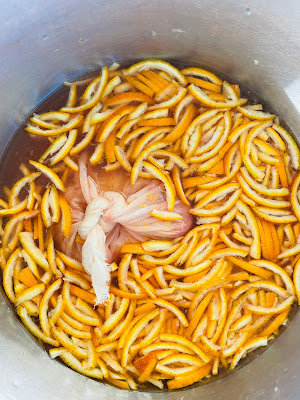
It’s that time of the year again, the air is fragrant with the smell of marmalade bubbling away in pots throughout the Ballymaloe Cookery School. Such a joy to be able to welcome students back to start the Spring Program. Seven nationalities this time, all super excited and eager to learn and determined to pack as much as possible into the next 12 weeks.

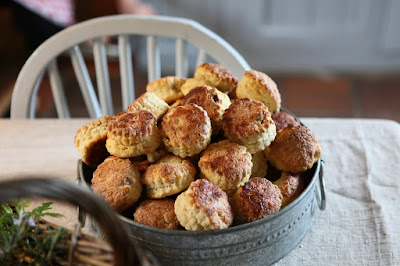
Many, in fact most have never made marmalade before, so they are delighted to discover how easy and rewarding it is. They are so proud of their jars, carefully lined up on the shelf side by side with the raspberry jam they learned how to make in the first week to slather onto Sweet Crunchy Scones. 


So how about a marmalade making session this week? The Seville oranges are in season, you’ll find them in your local greengrocer, Catriona Daunt and Willi Doherty of Organic Republic will have organic oranges on their stalls at Midleton, Bantry, Mahon Point and Douglas Farmers Markets – so worth the little extra they cost – see organic_republic on Instagram. Blood oranges have just arrived into the shops too, as have bergamots, how exotic do they sound and they also make a delicious marmalade.


Jam making doesn’t tend to appeal much to lads but marmalade gets some chaps really excited – older men particularly have very fixed ideas on what perfect marmalade should taste like. Some like it bitter and dark, others prefer a fresh citrusy flavour, a dash of Irish whiskey or a couple of dollops of black treacle for extra depth of flavour. 


I’m loving our blood orange and Campari marmalade, a twist on one of my favourite aperitif combos.

Oranges are not the only citrus that make good marmalade, three-fruit marmalade can be made at any time of the year, e.g. orange, lemon and grapefruit. Kumquat marmalade is also a super delicious luxurious treat and don’t forget clementine, mandarin or tangerine marmalade all made in a similar way and now in season too.


Saturday, 19 December 2020

Memories of Christmases Past

A trip down memory lane this Christmas I’ve been racking my brains to think of ways to add extra meaning to what for many, may be a long, lonely, cheerless Christmas. Pick up a pen, let our minds drift, dredge up memories of Christmas’s past, happy or perhaps tinged with sadness, anticipation, longing, disappointment… Don’t worry if the memories seem disjointed. Snippets of family get-togethers: raw, funny, poignant… just get it down on paper or if you can, sit by the fire, share and while away a few nostalgic hours recounting memories that may have been un-consciously buried for many years.


Memories come flooding back. Christmas baking started in November in our house too. This took two whole afternoons - we would look forward to it for weeks. Mum would specially wait until we came home from the village school so we could all get involved - washing the glacé cherries, deseeding muscatel raisins, chopping and peeling – everything had to be done from scratch then, and of course it was an advantage to have a few more hands around to help to cream the butter, line the cake tin and stir the plum pudding. That was super exciting because we each had to make a wish, eyes tightly shut, before the fruity mixture flecked with suet was packed into white Delph bowls and covered with greaseproof paper, “don’t forget to overlap it in the centre to allow the pudding to expand”. Little fingers held the knot to secure the twine handle tightly. Best of all the tradition in our house was to eat the first plum pudding on the night it was made. The Christmas season had begun and without doubt my mother’s plum pudding recipe (inherited from my grandmother and great-grandmother) is the best any of us have ever tasted and I’m not just being nostalgic. 


And then there was the trifle, Mum’s trifle was legendary – when I was little it was made with dried rusk like trifle sponges that appeared in the village shop before Christmas every year. Mum had a generous hand with the Bristol cream sherry – we split them in half, then sandwiched them with homemade raspberry jam, we layered them up with homemade custard (no not Birds) in two special cut glass trifle bowls retrieved from the top shelf of the pantry where they sat from one festive season to the next. I have to share this recipe with you I can confidently say that it’ll be the best trifle you’ll ever, ever taste. But there was ‘trifle drama’ in our house every year… Everyone loved the trifle. So Mummy had to hide the trifles every year because my crafty brothers would search the house to find it when they arrived home from midnight Mass on Christmas Eve. Once they found it in the oven of the gas cooker, eventually she resorted to hiding the trifle under her bed to save them for Christmas Day...

Monday, 7 December 2020

Cook Ahead for Christmas

My heart goes out to all who are hoping against hope that travel restrictions will be lifted so children, grandchildren and dear friends can make it home for Christmas. We’re all craving a time when we can sit round the kitchen table together and enjoy a meal and maybe a little singsong without worrying about social distancing. It truly is heart breaking…

So let’s keep positive and try to focus on happier times. None of us can predict what’s ahead so let’s plan regardless. Pour yourself a glass of something delicious to sip on, make a soothing pot of tea. Grab a pad and write some lists, plan a week of delicious Christmas meals and treats. Then tick off what can be made ahead and frozen or pickled, so if all goes well you can spend as much precious time with the loved ones you’ve been yearning to see.


In the worst case scenario, you can enjoy some delicious comforting food after Christmas. There are so many good things that can be happily be made ahead without suffering in any way. I’ll be making lots of soups and freezing them in recycled containers. Quarter, half and one litre milk cartons work brilliantly, stack neatly in the freezer and can be defrosted quickly. I’m loving root vegetable soups at present: Swede Turnip and Bacon Soup with Parsley Oil costs just pennies to make. I’m also loving Jerusalem Artichoke soup with Avocado and Crispy Croutons, Celeriac and Hazelnut Soup... Curried Parsnip Soup is a favourite as is the combination of Parsnip and Fennel Soup.


Recipes for both Bread Stuffing and Potato Stuffing freeze perfectly and will be brilliant to stuff a chicken, pheasant, turkey, goose and duck. Apple sauce and Red Cabbage complete that meal but the pièce de résistance is this All in One Christmas Dinner on a Dish - This recipe dates back to the time when the United Hunt held its annual ball in Ballymaloe every year before Christmas. They wanted the whole works so my mother in law, Myrtle devised this delicious version which we prepared ahead and reheated. It became such a favourite that it was requested every year. It’s definitely a bit of a mission to make and you’ll need to cook the turkey and ham separately. Meanwhile make a creamy mushroom filling with lots of fresh herbs and then a creamy sauce to coat the lot.

The end result is an unctuous “Turkey and Ham Sandwich” that reheats deliciously in 10-15 minutes on the day.

You’ll need something fresh tasting to flit across the tongue after that deeply satisfying meal. Who wouldn’t love a clean and fresh tasting citrusy Tangerine Sorbet or Compote of Pears with Saffron to round off a Christmas feast.

Have a wonderful joyful Christmas counting our blessings.


A Christmas Dinner on a Platter

Serves 30

1 x 12-14 lbs (5.5-6.5kg) free range turkey, preferably a bronze turkey

1 x 8-10 lbs (3.4-4.5kg) ham or loin of bacon, (unsmoked, soaked overnight in cold water if salty)

chicken or turkey stock

dry white wine

2 carrots

1 large sliced onion

2 sticks celery

bouquet garni

a few peppercorns

50g (2oz) chopped parsley

2 tablespoons other fresh herbs, eg. tarragon, thyme, chives, lemon balm

3-4 egg yolks

600ml (1 pint) cream

85g (3oz) roux

Duchesse potato made with 5.5-6.5kg (12-14lb) potato, for piping around the dishes

Mushroom with fresh herbs and cream

85-100g (3-4oz) butter

1.2kg (2½lb) sliced mushrooms

180 ml (6fl.oz) cream

4 tablesp. fresh herbs, eg. parsley, thyme, chives

425g (15oz) onions, finely chopped

Roux as needed (equal quantities of melted butter and flour cooked together for 2 – 3 mins)

lemon juice

salt and freshly ground pepper

3 – 4 serving platters

Cover the ham with cold water, bring it slowly to the boil and discard the water, cover again with hot water. Bring to the boil and simmer until the ham is cooked, 2½ hours approx. (calculate 20 minutes to 450g (1lb) as a rough guide). The skin will peel off easily when the ham is cooked.

Meanwhile, season the turkey and put it into a large saucepan with about 12.5-15cm (5-6 inches) of water or chicken stock and white wine. Add 1 large sliced onion, 2 sticks of celery, 2 large carrots cut in chunks, a bouquet garni and a few black peppercorns. Bring to the boil, cover closely and simmer for 2 hours approx. either on top of the stove or in a moderate oven 180°C/350°F/regulo 4.

While the turkey and ham are cooking, prepare the mushrooms. Melt the butter in a wide heavy bottomed saucepan. When it sizzles add the chopped onions, cover and sweat over a low heat until soft but not coloured. Meanwhile in a hot frying pan, fry off the mushrooms a few at the time in a little butter, season with salt and freshly ground pepper, add them to the softened onions. Add more butter if necessary, but never too much, add the freshly chopped herbs, cream and a squeeze of lemon juice. Taste for seasoning. Bring to the boil and thicken with enough roux to thicken lightly. Set the mushroom a la crémè aside until you are ready to assemble the dish.

When the turkey is cooked the legs will feel loose in their sockets, remove it from the casserole and de-grease the cooking liquid. Bring it to the boil and reduce by half. Add 300-450ml (10-15fl.oz) cream, I know that sounds shocking but this recipe makes 30 helpings and you are not going to eat it all yourself! Bring back to the boil and thicken to a light coating consistency with roux. Taste for seasoning.

Skin the turkey, the skin from a poached turkey is soft rather than crisp, so I don’t use it in this dish. Chop up the brown turkey meat from the legs and the white meat from the wings into smallish pieces and mix with the mushroom a la créme. Add 2 tablespoons chopped parsley, 1 dessertspoon thyme, chives and lemon balm if available.

Spread a layer of the creamy sauce on the serving dishes. Carve a nice slice of bacon or ham for each serving and place at regular intervals on top of the sauce. Spoon some of the brown meat and mushroom mixture on top. Carve the turkey breast into thin slices and place 1 slice per serving on top of the mushrooms and ham, making individual complete sandwiches.

Whisk 3-4 egg yolks with 150ml (5fl.oz) cream to make a liaison, blend well and stir this into the remainder of the cream sauce. (It should be a coating consistency.) Coat the pieces of turkey with this sauce. Cool and refrigerate. If serving on the day, pipe a generous border of Duchesse potato all around the edge of the dishes. Cool the dishes quickly, cover and refrigerate or freeze until needed.

Reheat in a moderate oven 180C-190C/350-375F/regulo 4-5, for 30 minutes approx. until it is bubbling and golden on top. If necessary, flash under the grill to brown the edges of the Duchesse potato.

Garnish with generous sprigs of flat leaf resh parsley and serve.

Top Tip:

If freezing the dishes with a potato border around the edge, freeze first and then cover tightly with strong cling film to prevent the potato from getting squashed.

However, for best results, freeze without the potato, but pipe it on just before reheating.

Roux

110g (4oz) butter

110g (4oz) flour

Melt the butter and cook the flour in it for 2 minutes on a low heat, stirring occasionally. Use as required. Roux can be stored in a cool place and used as required or it can be made up on the spot if preferred. It will keep at least a fortnight in a refrigerator.

Duchesse Potato

Serves 4

900g (2lbs) unpeeled potatoes, preferably Golden Wonders or Kerr's Pinks

300ml (10fl ozs) creamy milk

1-2 egg yolks or 1 whole egg and 1 egg yolk

25-50g (1-2oz) butter

Scrub the potatoes well. Put them into a saucepan of cold water, add a generous pinch of salt, bring to the boil. When the potatoes are about half cooked, 15 minutes approx. for 'old' potatoes, strain off two-thirds of the water, replace the lid on the saucepan, put on to a gentle heat and allow the potatoes to steam until they are cooked. Peel immediately by just pulling off the skins, so you have as little waste as possible, put through a ricer or mouli legume while hot. (If you have a large quantity, put the potatoes into the bowl of a food mixer and beat with the spade).

While the potatoes are being peeled, bring about 300ml (10fl oz//1 1/4 cups) of milk to the boil. Beat the eggs into the hot mashed potatoes, and add enough boiling creamy milk to mix to a soft light consistency suitable for piping, then beat in the butter, the amount depending on how rich you like your potatoes. Taste and season with salt and freshly ground pepper.

Note: If the potatoes are not peeled and mashed while hot and if the boiling milk is not added immediately, the Duchesse potato will be lumpy and gluey. If you only have egg whites they will be fine and will make a deliciously light mashed potato also.

Thursday, 29 October 2020

Trick or Treat

Trick or Treat is one of the most exciting and fun celebrations of the entire year, I love how kids all over the all over the country spend hours in happy anticipation, plotting and planning their costumes, disguises, scary tricks and wizardry…Can’t bear how their enthusiasm will need to be dampened this year…Poor little dotes….Robbed of their innocent fun because of Covid 19 restrictions. I keep wondering what the kids make of all this, amazingly some seem to just take it in their stride, perhaps they think this is all normal. Others are super anxious depending on how much they overhear from adults, radio, TV…..hard to avoid it…


Well how about a Monster Halloween Cooking Session with spooky music and lots of ghost stories and games? We definitely have to have a barmbrack – soak the fruit in strong Barry’s tea a day or two before and don’t forget to hide the Halloween charms in the fruity batter. If you find a ring in your slice – you’ll be married within the year. The Stick – a bad sign, your partner will beat you. A Rag – bad news too, your destiny is for a life of poverty. A Coin – is a promise of riches. These can also be hidden in a big bowl of colcannon, a traditional Irish Halloween dish – a little needs to be left on the window sill to appease the fairies and chase away the spirits or you could also be in deep trouble.


As children we had a variety Halloween games. Apple bobbing was a favourite, many involved divination and being blindfolded, and then there was the Three Saucers, arranged in a line, one contained water, one clay and the third held a ring. I seem to remember being spun around three times while blindfolded, then reaching out with my hands to touch a saucer. Water meant you were about to embark on an overseas journey, clay meant you would soon go to your grave and yet again the ring indicated matrimony was nigh….but now for fun in the kitchen.

‘Dragons eggs’ are easy and fun to do. Hard boil eggs for 10 minutes, peel them and drop into beetroot pickle juice, they turn a scary purply colour. Any number of spooky, scary shapes and concoctions can be made with children of all ages from a meringue mixture, that we call Púca. How about making these willowy ghosts….Devil’s brains made of popcorn will also be a hit, as will this Cobweb Cake. Buy a giant pumpkin, preferably with a stumpy stem, the kids will have hours of fun scooping out the seeds and flesh, seeds can be roasted and tossed in extra virgin olive oil and maybe a sprinkling of chilli flakes to nibble as a snack. The flesh can then be used to make a delicious pumpkin soup to serve in the pumpkin shell.

Maybe light a few bonfires in the garden and organise a spooky feast, have a safe and happy Halloween…


Saturday, 26 September 2020

Apple Season


Storm Ellen and Storm Francis played “hell” with our apple crop. We didn’t have a particularly good crop anyway but much of our meagre harvest ended up as windfalls in the grass underneath the apple trees in the orchard. Some like Beauty of Bath were already ripe, many other varieties were not but still the strong winds managed to shake them off their branches. I collected as many as I could to make windfall jelly. 


These under-ripe fruit are perfect for apple jelly, don’t worry about the odd bruise or slug bite just cut them out. Wash the fruit but don’t bother to peel, save the stalks and seeds too, they all add to the end result.

To make the preserve... Just fill a large pot with the coarsely chopped fruit, cover with cold water. Add other flavours if you fancy, a few fistfuls of blackberries, sloes, rowan berries, damsons or haws. If you add a mixture, it can be called Hedgerow jelly. Alternatively, simply add mint, chillies or a pinch of traditional cloves. This is a brilliant all-purpose recipe – ‘a-catch-all’ to use up a couple of fistfuls of autumn fruit and berries. I can add some ripe elderberries, and in a few weeks bletted medlars to make a delicious apple and medlar jelly to accompany game or a boiled leg of mutton.


We have also found that the strong pectin, rich apple juice works brilliantly as a natural gelling agent in both strawberry and blackberry jam, both of which can be notoriously difficult to set. We plan to freeze it as an experiment to use in winter jams and jellies instead of jam sugar.

And who doesn’t love an apple tart? Every family has their favourite pastry. My recipe for a buttery ‘break all the rules’ shortcrust pastry was passed on to me by my Mum. It’s not just our favourite but has become many other people’s ‘go to’ recipe for a tart or pie crust. 
Or how about an Autumn apple and blackberry pie, with cinnamon sugar or the aristocrat of apple tarts, the French classic, Tarte Tatin. 


Apple Charlotte is an almost forgotten pudding. I find it’s best made with Cox’s Orange Pippin apples and slices of good white yeast bread, soaked in melted butter – No wonder, it’s so delicious. I make it just once a year, but the memory of the texture of the crisp buttery bread and the sweetness of the Cox’s Apple puree lingers for months on end. Or a simple recipe for apple fritters, another of my grandchildren’s favourites which they have nicknamed Scary Little Monsters because of the funny shapes the batter cooks into on the pan... sprinkle them with castor sugar and enjoy....


Sunday, 21 April 2019

Happy Easter


Happy Easter to you all! What extraordinary weather we’re having as we spring into summer and back into winter again. Just a few mornings ago there was a bitter frost and then a glorious summer day… The leaves of my poor little beetroot seedlings got frizzled in the garden so I hope they’ll recover…
Image result for palais du poulets ballymaloe
This weather ‘roller coaster’ is kinda spooky… Normally the pale yellow stalks of sea kale are in season in April but this year we’ve been harvesting them from under the cloches for over a month, in fact the crop is almost finished. Even more extraordinary is our asparagus crop usually in season in May. This year we ate the first meal at the end of February and have had several cuttings since.
Super charged, climate change whether cyclical or man-made or a combination of both is a terrifying reality, however as a consequence, this Easter we can enjoy not just the first of the rhubarb but both Irish asparagus and the last of the seasons sea kale.
In every village shop and on the high street, the shelves are groaning with Easter eggs, ever cheaper and if the truth be known, less good chocolate in many. As we scramble for the cheaper and cheaper food, I can’t help thinking about the poor cocoa bean farmers, who are forced to take less and less for their raw materials – price takers, not price makers…
As with Christmas, the blatant excess and consumerism makes me deeply uneasy and almost feel queasy. Somehow it makes me focus even more on the true meaning of the Feast of Easter, I vividly remember a time when we all fasted throughout Lent and took on a penance of our choice. We ‘gave up’ sweets or ‘the drink’ or some other secret obsession…and then there was the satisfaction of having kept to our resolution and the joy of the first bite of an Easter egg on Easter Sunday after Mass or Church – one lovely little chocolate egg that we ate morsel by morsel often over several days.
Image result for palais du poulets ballymaloe
Image: Briana Palma

The hens in our ‘Palais de Poulets’ have gone into overdrive, they hate the cold, wet Winter days, and only lay haphazardly but coming up to Easter they start to lay again with gay abandon so if you have a few hens and I hope I’ve managed to persuade you by now to have a little moveable chicken coup on your lawn - you can enjoy dipping those tender asparagus spears into a freshly boiled egg.


Pam has already made the traditional Simnel Cake with a layer of marzipan in the centre and 11 balls on top to symbolise the apostles. Yes, I know there were 12 but Judas doesn’t make it to the top of the cake…
2016-03-12_lif_17371171_I12.JPG
Image: Independent.ie
We’ll roast a shoulder of sweet succulent Easter lamb and enjoy it with the already prolific spearmint in the herb garden and then of course there will be a juicy rhubarb tart. This year I’m using the Ballymaloe cream pastry recipe, it sounds super decadent and is but it’s extraordinarily good and super easy to make so don’t balk at the ingredients – just try it!

Tuesday, 26 February 2019

Marmalade


The last few weeks have been a frenzy of marmalade making, Julia, and her team in the Farmers Market kitchen here at the Ballymaloe Cookery School, have been slicing and juicing surrounded by preserving pans of bubbling citrus peel.

The Seville and Malaga orange season is a short one – running from mid-December to the end of February so there’s still time to whizz off to the shops or Farmers Market to stock up with the bitter sweet, vitamin packed citrus before they disappear off the shelves until next year.


If your budget will stretch to it, buy more than you can – they will freeze perfectly. All you need to do is throw them into the freezer in a bag or box in the quantity you need for a batch of your favourite marmalade.

Seville Orange Marmalade is the real deal, bitter sweet, the ‘classic’, made famous by Paddington Bear. It’s stronger, sourer and tangier than preserves made from other citrus. Having said that, grapefruit, both ruby and tart, lemons, limes, clementines, tangerines, mandarins, bergamots, kumquats, alone or in combination make delicious marmalades.

How do you like yours? Marmalade is an intensely personal taste. Some, like me, enjoy it dark and bitter, others prefer it fresh and fruity, some love lots of peel, others prefer less chewy bits and more wobbly jelly.

Seville and Malaga oranges are so called, because they are indigenous to Southern Spain and grow in towns and villages along the roadside. On my first trip to Spain I was intrigued by how law-abiding the Spaniards appeared to be. They didn’t seem to pull the ripe oranges off the trees…but I soon realised that these were bitter oranges so were less appealing to eat fresh and you may be surprised to learn that Spaniards consider our passion for marmalade a bit bizarre!

Seville oranges tend to be unwaxed, so the skin will be softer and not as smooth as other citrus. Discard any that show signs of decay and seek out organic fruit. Make your marmalade in small batches – say 2- 3 kilos of fruit at a time. Make yourself a cup of coffee, find a high stool, grab a sharp knife, turn on the radio and hand slice the peel. It will be altogether better than the sludgy result one gets from the food processor or mincer, I find it therapeutic, but not everyone does. A batch a day is certainly manageable – even better if you can entice someone else to get involved in the slicing – maybe for a ‘bit of gas’ organise a Marmalade Party with a few friends and give them a present of a pot for their input.

Image: Sharon Dunne Dowdall

There’s magic in marmalade making, not sure what it is but there’s a terrific ‘feel good’ factor when you can admire a line of glistening jars like ‘good deeds’ on your kitchen shelf. A stocked pantry to see you through the year…

Apart from marmalade recipes there’s many good things that benefit from a few spoons of marmalade or a little bitter orange zest e.g. panna cotta, muffins or scones. Slather it over a loin of boiled bacon (remove the rind first) and pop it under the grill to make a super quick and delicious glaze.

Massage it over a chicken breast or wings with some grated ginger and a little orange juice and then there’s Marmalade steamed pudding, my father-in-law, Ivan’s favourite steamed pudding.

Old Fashioned Seville Orange Marmalade


Seville and Malaga oranges come into the shops after Christmas and are around for 4-5 weeks.


Makes approx. 7 lbs (3.2kg)
2lbs (900g) of Seville oranges, organic if possible
4 pints (2.3L/10 cups) water
1 organic lemon
3 1/4lbs (1.45kg/6 1/2 cups) granulated sugar (warmed)

(Note on warming sugar: The faster jam/marmalade is made the better. If you add cold sugar it will take longer to return to the boil and will taste less fresh. Heat your sugar in a stainless steel bowl in a moderate oven for about 15 minutes. Do not leave it in too long or it will start to melt).

Wash the fruit, cut in half and squeeze out the juice. Remove the membrane with a spoon, put with the pips and tie them in a piece of muslin. Slice the peel finely or coarsely, depending on how you like your marmalade. Put the peel, orange and lemon juice, bag of pips and water into a non-reactive bowl or saucepan overnight.

Next day, bring everything to the boil and simmer gently for about 2 hours until the peel is really soft and the liquid is reduced by half. Squeeze all the liquid from the bag of pips and remove it.
Add the warmed sugar and stir until all the sugar has been dissolved. Increase the heat and bring to a full rolling boil rapidly until setting point is reached 5-10 minutes approx. Test for a set, either with a sugar thermometer (it should register 220F), or with a saucer. Put a little marmalade on a cold saucer and cool for a few minutes. If it wrinkles when you push it with your finger, it's done.

Allow marmalade to sit in the saucepan for 15 minutes before bottling to prevent the peel from floating.  Pot into hot sterilized jars. Cover immediately and store in a cool dry dark place.

N.B. The peel must be absolutely soft before the sugar is added, otherwise when the sugar is added it will become very hard and no amount of boiling will soften it.

Wednesday, 13 February 2019

Happy Chinese New Year


Happy Chinese New Year! Are you ready for yet another celebration? These festivities go on for almost a month and red is the magic colour.
This is the ‘Year of the Pig’ which symbolises wealth. In China, every year has a zodiac animal, the cycle repeats every 12 years, making it easy to figure out whether it’s your year or not. Just check your age in multiples of 12.

For the Chinese, the Spring Festival is the most important celebration of the entire year, similar to Christmas for us westerners. It marks the coming of Spring and all the excitement and joy of new beginnings. Unlike Christmas in this part of the world, Chinese New Year is a movable feast, predicated by the Lunar rather than the Gregorian calendar. Technically it’s the longest Chinese holiday, celebrated by over 20% of the world’s population – how amazing is that!

Image credit: rd.com
The most significant element of the holiday is the family reunion which triggers the largest human migration in the entire world. Millions of diligent hard working people, young and old, who now live in cities, travel home to rural areas to get together with their elderly parents.

Apparently, desperate singles often resort to hiring a fake boy or girlfriend to take home to allay their parents’ concerns - continuing the family name is one of the most important elements of Chinese culture, a reason why the Chinese have such a huge population…
Lively music and dance plus copious quantities of delicious food are important elements of the festivities. There are spectacular parades in Chinatowns all over the world - traditional lion and unicorn dances, dragon parades, bell ringing and lots of fun and fireworks. Children receive gifts of red envelopes stuffed with lucky money.

The feasting and excitement will continue until the Lantern Festival, the 15th day of the Chinese New Year – the first new moon of the Lunar year so you’ll see lots of red lanterns in all shapes and sizes, widely available in Asian shops, if you want to have fun and enter into the spirit….

A myriad of superstitions are attached to the New Year…People ‘spring clean’ the house on the day before Chinese New Year to sweep away bad luck and make way for good vibes.

Showering is taboo on New Year’s Day, as is throwing out rubbish. Hair cutting too is out, so hair salons are closed…
There are celebrations in Dublin, Cork, and Belfast. Cork which has been twinned with Shanghai since 2005, hosted its first Chinese New Year Festival on February 4th. Many iconic buildings around the world, including the Mansion House in Dublin and City Hall in Cork are illuminated in red to mark the beginning of Chinese New Year.

Lots of foods are associated with Chinese New Year, particularly dumplings. Spring rolls are universally loved, easy to make and when fried resemble gold bars. Each food is symbolic in some way, long noodles symbolise longevity…Citrus are also considered to be lucky.

Several festive desserts are also much loved, Tangyuan a type of rice ball, sounds like reunion in Chinese so they are favourites. As is Nian Gao, a type of rice cake which symbolises success. Fa gao – is a hybrid of a muffin and a sponge cake, the name means ‘get rich’ so everyone wants some of those too. Some of these desserts can be an acquired taste for non-Chinese but if you get an opportunity, do taste them. 


I’ve been to China several times, so I’m even more excited about Chinese New Year and am planning a little Chinese feast to celebrate.

Those who are born in the Year of the Pig, may want to check out the Chinese zodiac. Your lucky numbers are 2, 5 and 8, Lucky colours are yellow, grey, brown and gold and lucky directions are southeast and northeast…how about that….

Seek out your local Chinese restaurant, better still invite a few friends around to enjoy a home cooked Chinese meal, and don’t forget to wish our Chinese friends ‘In Nian Kuai le’ – ‘Happy New Year’.

Enjoy and Happy New Year of the - Pig the symbol of wealth.

Friday, 1 February 2019

St Brigid's Day


My year is punctuated by little highlights, occasions to look forward
to and celebrate. I particularly love St Brigid’s Day, it’s now just
around the corner, on February 1st, so I’m all set to celebrate and to
share the story of this feisty woman with my students from all over
the world and everyone else around me. This is a quintessentially
Irish celebration, St Brigid’s Day or Lá Féile Bríde also marks the
beginning of Spring, the season of hope and new life and comes
about half way between the Winter Solstice and the Spring Equinox,
when days begin to lengthen. In Pagan times it was referred to as
Imbolc or Imbolg which translates literally
to ‘in the belly’. Imbolc is one of the four major fire festivals referred
to in Irish mythology, the others are Bealtaine, Lughnasa and
Samhain.

Brigid, an icon for women was born near Faughart just north of
Dundalk in the 5th Century. She is the goddess of fertility in Celtic
mythology, patron saint of dairy and founded the first monastery in
Ireland in Kildare.

Many legends are associated with Brigid who by all accounts was an
extraordinary woman – a force to be reckoned with, a feminine role
model, well before her time. So I’m overjoyed that at last there is a
movement to elevate St Brigid to here rightful place beside St Patrick
as our female patron saint.

Last year, and once again this year, there will be a celebration of Lá
Féile Bríde at the Irish Embassy in London, a gathering to celebrate
not just St Brigid but the achievements of Irish women around the
globe.

Image result for st brigids cross

Just as the shamrock is associated with St Patrick, the little woven
cross, made of rushes is associated with St Brigid and was chosen as
the RTE logo when the station launched in 1961, and it was used

until 1995. Let’s bring it back and display it proudly as a beautiful
symbol of our culture.

Last year, St Brigid’s cross maker extraordinaire, Patricia O’Flaherty,
came over from Ireland clutching a bag of freshly cut rushes to
demonstrate how to make the traditional St Brigid’s cross at the Irish
Embassy in London http://www.naomhpadraighandcrafts.com/ . She
makes many versions and I was intrigued to learn from her that
originally all counties in Ireland had different patterns which
sometimes even varied from parish to parish.

To invoke Saint Brigid’s blessing we have a little cross made of local
rushes hanging over the door in our micro dairy to protect our small
Jersey herd which produces the most delicious rich milk.


My research into St Brigid, mentioned not only dairy but also honey
and the tradition of eating a big plate of floury boiled potatoes
slathered in rich homemade butter on St Brigid’s Day or St Brigid’s
Eve.

So here’s a recipe for how to make your own home churned butter… It’s super easy. We use our own cream, but one can of course make
butter with any good rich cream. Just pop it into a bowl, whisk until it
becomes stiff, continue until the butter globules separate from from
the buttermilk. Strain, wash well, salt generously, and pat into little
slabs or butter balls – easy-peasy. Impressive and delicious, even for
chefs, to slather over potatoes or a thick slice of warm soda bread or
spotted dog. 
So let’s all make or buy a little St Brigid’s cross and make St Brigid’s
Day into a real celebration, sharing a traditional meal around the
kitchen table with family and friends.


Sunday, 6 January 2019

Little Women's Christmas


Nollaig Na mBan…

That’s the enchanting Irish name given to Women’s Little Christmas on the 6th of January– the feast of the Epiphany.
It’s the traditional end of the Christmas season, the day we take down the Christmas tree and pack the baubles and tinsel into the attic for another year. But most importantly, it’s the day when the women of Ireland get to have time off from household chores after all the festive cooking.

A special day to get together with friends, sisters, mothers and aunts…The men, cheerfully take over the household for the day so the women can gather together to party and have a glass of fizz.
I was surprised to discover that many other countries have a similar tradition although the date sometimes varies. 

The Nordic countries have many customs, as have Ukraine, Slovenia, Galicia and closer to home there are high jinks and ceilis in the Scottish highlands it’s called, Là Féill nan Rìgh, The Feast of the Kings in Gaelic. La Fête des Rois is also celebrated in France with the delicious Galette des Rois as the centre piece of the table. Every boulangére offers their version of the flaky pastry galette, with a little trinket known as a ‘fève’ hidden deep inside the marzipan filling. Each comes with a golden paper crown which the lucky person who finds the fève in their slice will wear when they are crowned king for the day.

Here in Ireland the custom had almost disappeared, apart from in the counties of Cork and Kerry but there has been an enthusiastic revival of Women’s Little Christmas in recent years. Many restaurants and hotels are offering jolly Nollaig na bMan celebrations with exciting entertainment, dancing and music as well as afternoon tea or dinner so the womenfolk can enjoy a night out.
Just found this funny poem on social media penned by Nuala Woulfe @NWoulfeWriter – a few lines to whet your appetite.

Mammys on the Dance Floor
Mammys on the dance floor, let out for the night,
Dancing round their handbags, whooping with delight,
Mammys on the dance floor, kicking up the dust
Checking out the six packs, overcome with lust!
Mammys on the dance floor, one more round of beer,
Eyeing up the bouncers, giving them the leer…


Wednesday, 26 December 2018

Christmas Leftovers


I hope you’ve managed to resist the urge to fill your fridge and pantry to bursting point but having said that I love the fun of using up leftover bits of this and that.


Now for a few ideas…Not sure if there will be any little morsels of turkey or crispy skin left over after everyone has tucked into turkey sandwiches on Christmas evening but, if there are, strip off the carcass to make this delicious pilaff. Then pop the carcass into a pot with 2 or 3 quartered onions, same of carrots and a stick or two of celery, a sprig of thyme and a few peppercorns. If you don’t use the giblets (neck, heart and gizzard) to make a flavourful stock for the gravy, add them in to the pot. Cover the whole lot with cold water, bring to the boil, skim and simmer for 3 to 4 hours. Strain and you’ll have a delicious pot of turkey broth to sip or use as a base for a stew, casserole or to make an unctuous risotto or the pilaff.

Use the turkey liver immediately while it is fresh to make this parfait and serve it in little pots with plump Pedro Ximénez raisins. It’ll make a delicious starter or can be slathered on crisp, hot toast for a snack. (Read on for the recipe).

What other leftovers? Might you have any leftover Brussel sprouts, if so trim the outsides, then half or quarter each one, blanch, drain well, toss in extra virgin olive oil and roast in a hot oven. Then toss with chorizo crumbs – so yummy. I’m loving roasted cauliflower and Romanesco florets too.

Leftover cranberry sauce keeps well so don’t fuss about using it up but do try it with some soft goat cheese. Fresh cranberries also keep well and of course freeze perfectly, otherwise throw a fistful into your salads, scones, muffins or soda bread. Maybe stew them down, add a little chopped rosemary and add them to an apple sauce to serve with a pork chop or make a ‘catch-all’ cranberry chutney.

Sprinkle left over mincemeat into a batch of scones. Serve them warm with the remainder of the brandy butter. 

What else might you have lurking in your fridge, perhaps some miscellaneous morsels of cheese? Well I’ve got just the perfect recipe, a little gem that turns leftover cheese into delicious biscuits. A perfect snack or an irresistible nibble to serve with a glass of wine.

Make breadcrumbs from left over bread and pop them into the freezer. They’ll be so useful for crumbles, stuffing or panagratto to sprinkle over stews or gratins, sweet or savoury or make a Queen of Puddings. Otherwise make a bread and butter pudding, it’s a brilliant, catch-all for all kinds of scraps, morsels of meat or smoked fish, Brussel sprouts, chard, sautéed mushrooms, chopped herbs, grated cheese… just omit the sugar for a savoury version and serve with a  good green salad.

Well, there are just a few ideas to help you to be creative with your leftovers. Meanwhile, a very Happy Christmas and New Year, hopefully you’ll manage to get a few delicious long walks in….

Turkey Liver Parfait with Pedro Ximénez Raisins


Serves 10-12 depending on how it is served.

225g (8oz) fresh organic turkey livers
2 tablespoons
200-300g (8-12oz) butter (depending on how strong the livers are)
1 teaspoon fresh thyme leaves
1 large clove garlic, crushed
225g (8oz) butter, cubed
freshly ground pepper
50g (2oz) of raisins or sultanas
2 tablespoons Pedro Ximénez Sherry
50g (2oz) pistachio nuts, halved

clarified or melted butter to seal

Put the raisins into a small bowl, cover with warm Pedro Ximenez and leave to soak until plump and juicy.

Wash the livers in cold water and remove any membrane or green tinged bits. Dry on kitchen paper.

Melt a little butter in a frying pan; when the butter foams add in the livers and cook over a gentle heat.  Be careful not to overcook them or the outsides will get crusty; all trace of pink should be gone.   Add the crushed garlic and thyme leaves to the pan, stir and then de-glaze the pan with brandy, allow to flame or reduce for 2-3 minutes. Scrape everything with a spatula into a food processor.  Purée for a few seconds.  Allow to cool.

Add the butter. Purée until smooth.  Season carefully, taste and add more butter.

This parfait should taste fairly mild and be quite smooth in texture. Fill into little pots or into one large terrine.   Tap on the worktop to knock out any air bubbles. Spoon a little clarified butter over the top of each little pot of pâté to seal. If serving immediately spoon the Pedro Ximénez soaked raisins and pistachio nuts on top.
Serve with brioche, crusty bread, sourdough toasts or croutes.   This parfait will keep for 4 or 5 days in a refrigerator.

Watchpoint: It is essential to cover turkey liver pate with a layer of clarified or even just melted butter, otherwise the parfait will oxidize and taste bitter and turn grey in colour.

Pilaff Rice with Turkey and Ham and Fresh Herbs

Although a risotto can be made in 20 minutes it entails 20 minutes of pretty constant stirring which makes it feel rather laboursome. A pilaff on the other hand looks after itself once the initial cooking is underway. The pilaff is versatile – serve it as a staple or add whatever tasty bits you have to hand. Beware however of using pilaff as a dustbin, all additions should be carefully seasoned and balanced.

Serves 8

25g (1oz) butter
2 tablespoons finely chopped onion or shallot
400g (14oz) long-grain rice (preferably Basmati)
975ml (32fl oz) homemade turkey or chicken stock
225g (8oz) diced cooked turkey
225g (8oz) diced cooked ham or bacon
salt and freshly ground pepper
2 tablespoons freshly chopped herbs eg. parsley, thyme, chives: optional

Melt the butter in a casserole, add the finely chopped onion and sweat for 2-3 minutes. Add the rice and toss for a minute or two, just long enough for the grains to change colour. Season with salt and freshly ground pepper, add the chicken stock, cover and bring to the boil. Reduce the heat to a minimum and then simmer on top of the stove or in the oven 160C/325F/Gas Mark 3 for 10 minutes approx. By then the rice should be just cooked and all the water absorbed. At this stage stir in the diced turkey and ham/bacon to heat through, ensure it is piping hot. Just before serving stir in the fresh herbs if using.

Note
Basmati rice cooks quite quickly; other types of rice may take up to 15 minutes.


Roast Brussels Sprouts with Chorizo Crumbs
Serves  4-6
I first tasted roast Brussels sprouts cooked in a wood burning oven in a restaurant in San Francisco about ten years ago. My friend Mary Risley told me this new way of cooking Brussels sprouts was causing lots of excitement. I didn’t get it, but now I love them cooked this way, there’s a fine line between sweet roasted and acrid burnt, so watch them like a hawk.

(450g) 1lb Brussels sprouts
extra virgin olive oil
flaky sea salt
freshly ground black pepper
Chorizo crumbs to serve (see recipe)

Preheat the oven to 230°C/450°F/Mark 8.
If necessary trim the Brussels sprouts of any tough outside leaves, trim the stalk, cut into halves. Blanch in boiling water for 2 – 3 minutes. Drain well.  In a bowl drizzle the blanched sprouts with extra virgin olive oil. Season with flaky sea salt and freshly ground black pepper, toss to coat. Transfer to a roasting tin, cook for 10 – 15 minutes depending on size, shake the pan occasionally. The sprouts should be pale golden and crisp on the outside and tender within. Sprinkle with the chorizo crumbs and transfer to a hot serving dish.

Chorizo & Parsley Crumbs

Chorizo crumbs are delicious used in so many ways.  We like to scatter them over potato, celeriac, Jerusalem artichoke or watercress soup.  They are particularly good sprinkled over cauliflower or macaroni cheese.  Keep in a box in your fridge for several weeks, or freeze and scatter when you fancy!

Makes 175g (6oz)

4 tablespoons extra virgin olive oil
125g (4 1/2oz) chorizo, peeled and cut into 1/4 inch dice
100g (3 1/2oz) coarse breadcrumbs
1 – 2 tablespoons chopped flat leaf parsley

Put the oil into a cool pan, add the diced chorizo.  Toss on a low heat until the oil starts to run and the chorizo begins to crisp.  Careful it’s easy to burn the chorizo, drain through a metal sieve, save the oil and return to the pan.

Increase the heat, add coarse breadcrumbs and toss in the chorizo oil until crisp and golden.  Drain and allow to cool, add to the chorizo, stir in the chopped parsley.

Doune McKenzie's Cheese Biscuits


Any bits of left over cheese eg. Cheddar, Parmesan, Gruyére, Coolea, Cashel Blue … a little soft cheese may also be added but you will need some hard cheese to balance the flavour.

Weigh cheese then use equal amounts of butter and plain white flour.

Grate the cheese - rinds and all. Dice the butter.  Cream the butter and stir in the flour and grated cheese, form into a roll like a long sausage, about 4cm (1 1/2 inches) thick. Alternatively whizz in a food processor until it forms a dough, shape using a little flour if necessary. Wrap in parchment and twist the end like a Christmas cracker. Chill in the refrigerator for 1 -2 hours until solid.  

Slice into rounds - about 7mm (1/3 inch) thick.  Arrange on a baking tray, cook in a preheated oven 250ºC/475ºF/regulo 9 for approximately 5 minutes until golden brown.  

Leave to cool for a couple of seconds then transfer to a wire rack.   Best eaten on the day they are made as they soften quite quickly.