Showing posts with label China. Show all posts

Monday, 3 August 2020

Armchair Travels to China - Fuchsia Dunlop

Travel is understandably out of the question for the foreseeable future. How fortunate am I to have been able to visit and enjoy the food of so many countries, such happy memories…Amongst others, I long to revisit Myanmar, Transylvania, Egypt, Turkey, Mexico, Cambodia, Laos, Tasmania, China, and of course India, my perennial favourite.

No hope of that any time soon, so for the present, I relive the memories through photos and videos on my iPhone and the interviews I recorded with many of the fascinating cooks, farmers and artisan producers I encountered and of course I wish I had done many, many more.

But the most poignant way to bring precious memories flooding back is through the food. Even smells transport me to far away places, to bustling food markets, ‘hole in the wall’ eateries, street stalls, as well as world renowned restaurants like Noma in Copenhagen, Fäviken in Sweden, Chez Panise in California, Atica in Melbourne and Restaurante Tlamanalli in the Teotitlan del Valle outside Oaxaca in Mexico.

This week I am going back to China on my virtual food travels, particularly poignant in the light of the Covid-19 pandemic. My first visit, in February 2018 was to attend the International Slow Food Conference in Chenghu, the UNESCO capital of gastronomy in the Sichuan province. 


The food was fantastic, the city of Chenghu welcomed the delegates from all over the world whole heartedly, with wonderful entertainment, opera, theatre, music and superb Chinese food for which the Sichuan province is justly famous. We visited day and night food markets with super fresh food, the freshest fish I have ever seen, some still alive. In Pixian, a suburb of Chengdu, we were shown how the famous Chinese spicy bean paste, Dobuanjiang is slowly fermented for several years in huge earthenware pots with wheat, salt and a variety of chillies – it’s the quintessential flavour of China. Dobuanjiang, is considered to be the soul of Sichuan cooking is an essential ingredient in Mapotofu.


We visited organic farms in the highlands, a 2 hour bus journey outside the city, a wonderful opportunity to see the countryside and wave to the friendly people, many of whom may not ever have seen a non-Chinese person before. It was an intriguing cultural experience, one I will never forget.

Q&A: Fuchsia Dunlop on the politics of Chinese food | Arts ...

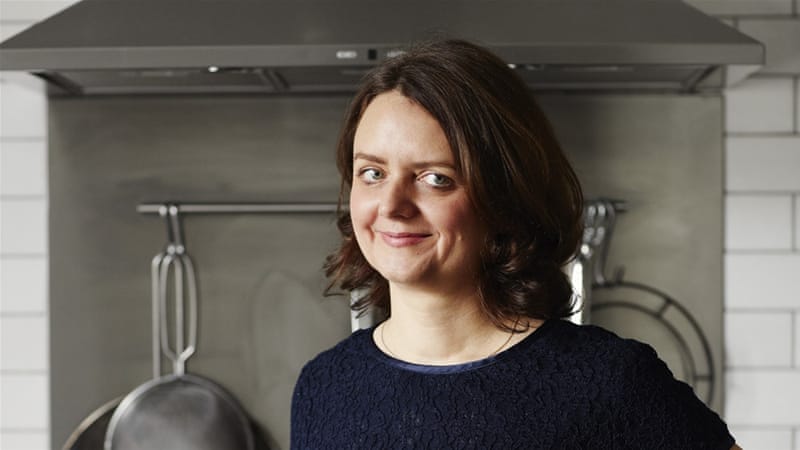
One of the special highlights of my visit to Chenghu was meeting Fuchsia Dunlop who was the very, first Westerner to train at the Sichuan Institute of Higher Cuisine and for almost three decades. Since then she has travelled around China collecting recipes. Fuchsia speaks, reads and writes in Chinese and is the author of four outstanding books on Chinese Food. Her Sichuan Cookery published in 2001 was voted by Observer Food Magazine as one of the greatest cook books of all time – how about that for an accolade.

On this trip, Fuchsia was revisiting the region where her culinary journey began, adding more than 50 recipes to the original repertoire and accompanying them with her incomparable knowledge of the taste, textures and sensations of Sichuanese cookery. Fuchsia’s writing on the cultural and culinary history of Sichuan is quite simply spellbinding and there are food and gorgeous travel photos.
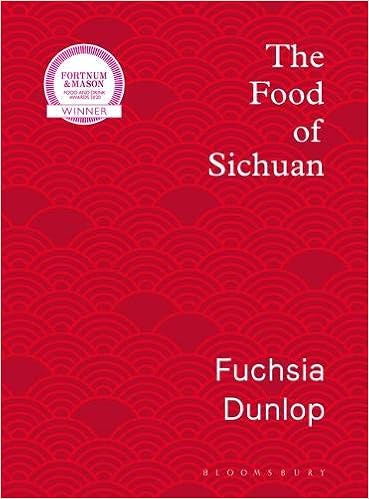

Sounds like I’m getting a bit carried away, well if you have even the remotest interest in Chinese food prepare to be captivated by The Food of Sichuan – Fuchsia Dunlop’s insight into one of the world’s greatest cuisines published by Bloomsbury.

Wednesday, 13 February 2019

Happy Chinese New Year


Happy Chinese New Year! Are you ready for yet another celebration? These festivities go on for almost a month and red is the magic colour.
This is the ‘Year of the Pig’ which symbolises wealth. In China, every year has a zodiac animal, the cycle repeats every 12 years, making it easy to figure out whether it’s your year or not. Just check your age in multiples of 12.

For the Chinese, the Spring Festival is the most important celebration of the entire year, similar to Christmas for us westerners. It marks the coming of Spring and all the excitement and joy of new beginnings. Unlike Christmas in this part of the world, Chinese New Year is a movable feast, predicated by the Lunar rather than the Gregorian calendar. Technically it’s the longest Chinese holiday, celebrated by over 20% of the world’s population – how amazing is that!

Image credit: rd.com
The most significant element of the holiday is the family reunion which triggers the largest human migration in the entire world. Millions of diligent hard working people, young and old, who now live in cities, travel home to rural areas to get together with their elderly parents.

Apparently, desperate singles often resort to hiring a fake boy or girlfriend to take home to allay their parents’ concerns - continuing the family name is one of the most important elements of Chinese culture, a reason why the Chinese have such a huge population…
Lively music and dance plus copious quantities of delicious food are important elements of the festivities. There are spectacular parades in Chinatowns all over the world - traditional lion and unicorn dances, dragon parades, bell ringing and lots of fun and fireworks. Children receive gifts of red envelopes stuffed with lucky money.

The feasting and excitement will continue until the Lantern Festival, the 15th day of the Chinese New Year – the first new moon of the Lunar year so you’ll see lots of red lanterns in all shapes and sizes, widely available in Asian shops, if you want to have fun and enter into the spirit….

A myriad of superstitions are attached to the New Year…People ‘spring clean’ the house on the day before Chinese New Year to sweep away bad luck and make way for good vibes.

Showering is taboo on New Year’s Day, as is throwing out rubbish. Hair cutting too is out, so hair salons are closed…
There are celebrations in Dublin, Cork, and Belfast. Cork which has been twinned with Shanghai since 2005, hosted its first Chinese New Year Festival on February 4th. Many iconic buildings around the world, including the Mansion House in Dublin and City Hall in Cork are illuminated in red to mark the beginning of Chinese New Year.

Lots of foods are associated with Chinese New Year, particularly dumplings. Spring rolls are universally loved, easy to make and when fried resemble gold bars. Each food is symbolic in some way, long noodles symbolise longevity…Citrus are also considered to be lucky.

Several festive desserts are also much loved, Tangyuan a type of rice ball, sounds like reunion in Chinese so they are favourites. As is Nian Gao, a type of rice cake which symbolises success. Fa gao – is a hybrid of a muffin and a sponge cake, the name means ‘get rich’ so everyone wants some of those too. Some of these desserts can be an acquired taste for non-Chinese but if you get an opportunity, do taste them. 


I’ve been to China several times, so I’m even more excited about Chinese New Year and am planning a little Chinese feast to celebrate.

Those who are born in the Year of the Pig, may want to check out the Chinese zodiac. Your lucky numbers are 2, 5 and 8, Lucky colours are yellow, grey, brown and gold and lucky directions are southeast and northeast…how about that….

Seek out your local Chinese restaurant, better still invite a few friends around to enjoy a home cooked Chinese meal, and don’t forget to wish our Chinese friends ‘In Nian Kuai le’ – ‘Happy New Year’.

Enjoy and Happy New Year of the - Pig the symbol of wealth.

Friday, 7 September 2018

A Rewarding Trip to China


Recently I went all the way to China … The impetus for the trip was the news that my last book Grow Cook Nourish had been shortlisted for a World Gourmand Cookbook award. It was up against stiff competition including Stephanie Alexander’s Kitchen Garden Companion and Oprah Winfrey’s Food, Health and Happiness… reckoned that my tome urging people to take back control over their food, grow some of their own and cook it, wouldn’t have a chance.


Image result for grow cook nourish


Nonetheless it was an excuse to spend a few days doing some edible research in China and surprise, surprise, Grow Cook Nourish WON a special award  - Best World Gourmand Cookbook 2017 -
and my publisher Kyle Cathie received the Publisher of the Year Award so that was definitely the ‘icing on the cake’ …


On this trip we took in Beijing, Datong, Pingyao and Yantai where
the awards were hosted.

Yes, I walked on the Great Wall of China, visited the Forbidden City, the Temple of Heaven, The Summer Garden and the totally awesome Hanging Temples near Mount Hengshan in the Shanxi Province but in this piece, I’ll concentrate on the food and the many good things we tasted.


The pace of change, in virtually all Chinese cities is just jaw
dropping, most of the traditional single or double storey houses have been demolished to make way for gigantic skyscrapers 28-30 stories tall, the horizon is dotted with the tallest cranes I’ve ever seen.

Peking duck is the great speciality of Beijing. Of course there are a
myriad of restaurants who serve it, Mongolian hot pot too, but if you have a craving for McDonald’s or KFC they are there aplenty,
however I’m always on a mission to taste the local street foods and so far, they are still a part of everyday life, even in Beijing where it
seems there is a huge push towards all things Western. A wander
through a local vegetable market is also an illuminating window into local culture and eating habits. One of Beijing’s most fascinating is the Sanyvanli Market, opens at 6am and has stall after stall of beautiful super fresh vegetables and exotic fruit, mangosteen, durian, lychees, pomelo, also ripe mangoes and huge hard scary grapes, some round, others pointy. All the fruit and vegetables were beautifully presented and packed including, boxes of spanking fresh waxberries (myrica rubra) also called Chinese bayberry, all juicy and delicious.Stalls were piled high with fish and shellfish, scallops, sea urchins, crabs, lobsters, crayfish, much of it still alive.

Butcher shops selling freshly slaughtered meat, black and white
skinned poultry and tons of offal. A wild mushroom stall with a mind-blowing selection of fungi including cauliflower mushrooms the size of a baby’s head. Two little bakeries, making Chinese flat breads,were nestled among the stalls. I loved watching them rolling huge rounds of dough – 2 feet in diameter and cooking it on a hot griddle, sometimes plain but often with chopped scallions or garlic chives incorporated. I took a little video so I can experiment, it was so delicious, I hope I can manage to recreate this popular breakfast bread at home.


The night markets are also a must, there are many but we visited the one just off Wangfujing Street, Beijing’s posh shopping street where all the luxury brand shops cluster. This area really comes to life after sun down.

Here I ate scorpion kebabs and crispy silk worms, surprisingly
delicious once you grit your teeth and decide to be adventurous. Lots of offal, squid and dumplings, chicken feet and gizzards and tiny toffee apples- a Beijing speciality. Lamb kebabs were also delicious but a roast goat (kid) leg with cumin and chilli was the best of all. This market was fun but a bit touristy.

Street food vendors are still a vital part of everyday life in China.
Dough stacks, youtiao, snacks like scallion pancakes, Jianbing . Sweet potatoes roasted in old cooking oil drums are also delectable.
Don’t leave China without attending a tea ceremony, a wonderful
ritual after which tea will never be the same again. We tasted ginseng, jasmine and gunpowder tea and puer, exquisite but sadly the teas I bought having been assured that they were identical quality were anything but – sadly a frequent occurrence in China, from taxis to restaurants. Follow the guidebooks advice, insist on using the taxi meter and check your bill meticulously…..otherwise a brilliant and delicious experience.