Showing posts with label recipes. Show all posts

Friday, 6 August 2021

Summery Salads


Delicious as they are, let’s throw out our preconceived notions of traditional salads, and get wildly creative with both dressings and flavour combinations...

Choose beautiful greens, not just a bag of mixed salad leaves. Seek out crunchy heads of Little Gem, speckled Castelfranco, bitter red chicory, Endive and Radicchio, peppery watercress sprigs, dandelion leaves, pea shoots, crunchy little romanesco florets....


Add lots of soft fresh herbs... mint, chervil, coriander, basil, tarragon, can’t you just taste the combination.

Kale and Hispi or Savoy cabbage are transformed when sprinkled with flaky sea salt then given a good massage until they are soft and silky.

Ramp up your dressings....

The classic formula of 3 parts oil to 1 part acid seems so samey.....

To add extra zizz, try a perkier 2 parts oil to 1 part acid, could be wine, cider, sherry or champagne vinegar or freshly squeezed citrus juice...


But let’s get extra adventurous... how about…

Natural yoghurt, lime and harissa....

Grape seed oil, rice vinegar, miso and grated ginger...

Mayonnaise, rice wine vinegar, garlic and gochujang...

Extra virgin olive oil, cider vinegar and maple syrup...


Roasting or grilling transforms vegetables like carrots, radishes, broccoli, cabbage or romanesco florets. Be bold, use a high heat for maximum caramelisation and sweetness.

Raddichio, chicory, kale and Romaine are also brilliant grilled.

Some pickled vegetables – chillies, cucumbers, red onions, grapes, radishes, rhubarb really add extra oomph to a salad.


Think about texture as well as flavour. Add crunchy corn or potato chips, crispy fried onions or shallots or slivered garlic.

Toasted walnuts, almonds, hazelnuts, cashew nuts or roasted nuts are always a pleasing addition...

Crispy pork scratchings, garlic croutons or chunks of nut brittle can also be a delicious surprise.


Shaved radishes, scallions, fennel, kohl rabi or beets submerged in cold water with lots of ice will crisp deliciously and can be done several hours ahead. Add a dice of membrillo for extra sweetness and a little unexpected pop of flavour.

Slivered chilli, salted anchovies or sardines or grated horseradish or burratta are also brilliant flavour enhancers.

Where to stop…really, the world’s your oyster so throw caution to the wind. I also love to occasionally finish a salad with a little grating of lemon zest…


Monday, 7 December 2020

Cook Ahead for Christmas

My heart goes out to all who are hoping against hope that travel restrictions will be lifted so children, grandchildren and dear friends can make it home for Christmas. We’re all craving a time when we can sit round the kitchen table together and enjoy a meal and maybe a little singsong without worrying about social distancing. It truly is heart breaking…

So let’s keep positive and try to focus on happier times. None of us can predict what’s ahead so let’s plan regardless. Pour yourself a glass of something delicious to sip on, make a soothing pot of tea. Grab a pad and write some lists, plan a week of delicious Christmas meals and treats. Then tick off what can be made ahead and frozen or pickled, so if all goes well you can spend as much precious time with the loved ones you’ve been yearning to see.


In the worst case scenario, you can enjoy some delicious comforting food after Christmas. There are so many good things that can be happily be made ahead without suffering in any way. I’ll be making lots of soups and freezing them in recycled containers. Quarter, half and one litre milk cartons work brilliantly, stack neatly in the freezer and can be defrosted quickly. I’m loving root vegetable soups at present: Swede Turnip and Bacon Soup with Parsley Oil costs just pennies to make. I’m also loving Jerusalem Artichoke soup with Avocado and Crispy Croutons, Celeriac and Hazelnut Soup... Curried Parsnip Soup is a favourite as is the combination of Parsnip and Fennel Soup.


Recipes for both Bread Stuffing and Potato Stuffing freeze perfectly and will be brilliant to stuff a chicken, pheasant, turkey, goose and duck. Apple sauce and Red Cabbage complete that meal but the pièce de résistance is this All in One Christmas Dinner on a Dish - This recipe dates back to the time when the United Hunt held its annual ball in Ballymaloe every year before Christmas. They wanted the whole works so my mother in law, Myrtle devised this delicious version which we prepared ahead and reheated. It became such a favourite that it was requested every year. It’s definitely a bit of a mission to make and you’ll need to cook the turkey and ham separately. Meanwhile make a creamy mushroom filling with lots of fresh herbs and then a creamy sauce to coat the lot.

The end result is an unctuous “Turkey and Ham Sandwich” that reheats deliciously in 10-15 minutes on the day.

You’ll need something fresh tasting to flit across the tongue after that deeply satisfying meal. Who wouldn’t love a clean and fresh tasting citrusy Tangerine Sorbet or Compote of Pears with Saffron to round off a Christmas feast.

Have a wonderful joyful Christmas counting our blessings.


A Christmas Dinner on a Platter

Serves 30

1 x 12-14 lbs (5.5-6.5kg) free range turkey, preferably a bronze turkey

1 x 8-10 lbs (3.4-4.5kg) ham or loin of bacon, (unsmoked, soaked overnight in cold water if salty)

chicken or turkey stock

dry white wine

2 carrots

1 large sliced onion

2 sticks celery

bouquet garni

a few peppercorns

50g (2oz) chopped parsley

2 tablespoons other fresh herbs, eg. tarragon, thyme, chives, lemon balm

3-4 egg yolks

600ml (1 pint) cream

85g (3oz) roux

Duchesse potato made with 5.5-6.5kg (12-14lb) potato, for piping around the dishes

Mushroom with fresh herbs and cream

85-100g (3-4oz) butter

1.2kg (2½lb) sliced mushrooms

180 ml (6fl.oz) cream

4 tablesp. fresh herbs, eg. parsley, thyme, chives

425g (15oz) onions, finely chopped

Roux as needed (equal quantities of melted butter and flour cooked together for 2 – 3 mins)

lemon juice

salt and freshly ground pepper

3 – 4 serving platters

Cover the ham with cold water, bring it slowly to the boil and discard the water, cover again with hot water. Bring to the boil and simmer until the ham is cooked, 2½ hours approx. (calculate 20 minutes to 450g (1lb) as a rough guide). The skin will peel off easily when the ham is cooked.

Meanwhile, season the turkey and put it into a large saucepan with about 12.5-15cm (5-6 inches) of water or chicken stock and white wine. Add 1 large sliced onion, 2 sticks of celery, 2 large carrots cut in chunks, a bouquet garni and a few black peppercorns. Bring to the boil, cover closely and simmer for 2 hours approx. either on top of the stove or in a moderate oven 180°C/350°F/regulo 4.

While the turkey and ham are cooking, prepare the mushrooms. Melt the butter in a wide heavy bottomed saucepan. When it sizzles add the chopped onions, cover and sweat over a low heat until soft but not coloured. Meanwhile in a hot frying pan, fry off the mushrooms a few at the time in a little butter, season with salt and freshly ground pepper, add them to the softened onions. Add more butter if necessary, but never too much, add the freshly chopped herbs, cream and a squeeze of lemon juice. Taste for seasoning. Bring to the boil and thicken with enough roux to thicken lightly. Set the mushroom a la crémè aside until you are ready to assemble the dish.

When the turkey is cooked the legs will feel loose in their sockets, remove it from the casserole and de-grease the cooking liquid. Bring it to the boil and reduce by half. Add 300-450ml (10-15fl.oz) cream, I know that sounds shocking but this recipe makes 30 helpings and you are not going to eat it all yourself! Bring back to the boil and thicken to a light coating consistency with roux. Taste for seasoning.

Skin the turkey, the skin from a poached turkey is soft rather than crisp, so I don’t use it in this dish. Chop up the brown turkey meat from the legs and the white meat from the wings into smallish pieces and mix with the mushroom a la créme. Add 2 tablespoons chopped parsley, 1 dessertspoon thyme, chives and lemon balm if available.

Spread a layer of the creamy sauce on the serving dishes. Carve a nice slice of bacon or ham for each serving and place at regular intervals on top of the sauce. Spoon some of the brown meat and mushroom mixture on top. Carve the turkey breast into thin slices and place 1 slice per serving on top of the mushrooms and ham, making individual complete sandwiches.

Whisk 3-4 egg yolks with 150ml (5fl.oz) cream to make a liaison, blend well and stir this into the remainder of the cream sauce. (It should be a coating consistency.) Coat the pieces of turkey with this sauce. Cool and refrigerate. If serving on the day, pipe a generous border of Duchesse potato all around the edge of the dishes. Cool the dishes quickly, cover and refrigerate or freeze until needed.

Reheat in a moderate oven 180C-190C/350-375F/regulo 4-5, for 30 minutes approx. until it is bubbling and golden on top. If necessary, flash under the grill to brown the edges of the Duchesse potato.

Garnish with generous sprigs of flat leaf resh parsley and serve.

Top Tip:

If freezing the dishes with a potato border around the edge, freeze first and then cover tightly with strong cling film to prevent the potato from getting squashed.

However, for best results, freeze without the potato, but pipe it on just before reheating.

Roux

110g (4oz) butter

110g (4oz) flour

Melt the butter and cook the flour in it for 2 minutes on a low heat, stirring occasionally. Use as required. Roux can be stored in a cool place and used as required or it can be made up on the spot if preferred. It will keep at least a fortnight in a refrigerator.

Duchesse Potato

Serves 4

900g (2lbs) unpeeled potatoes, preferably Golden Wonders or Kerr's Pinks

300ml (10fl ozs) creamy milk

1-2 egg yolks or 1 whole egg and 1 egg yolk

25-50g (1-2oz) butter

Scrub the potatoes well. Put them into a saucepan of cold water, add a generous pinch of salt, bring to the boil. When the potatoes are about half cooked, 15 minutes approx. for 'old' potatoes, strain off two-thirds of the water, replace the lid on the saucepan, put on to a gentle heat and allow the potatoes to steam until they are cooked. Peel immediately by just pulling off the skins, so you have as little waste as possible, put through a ricer or mouli legume while hot. (If you have a large quantity, put the potatoes into the bowl of a food mixer and beat with the spade).

While the potatoes are being peeled, bring about 300ml (10fl oz//1 1/4 cups) of milk to the boil. Beat the eggs into the hot mashed potatoes, and add enough boiling creamy milk to mix to a soft light consistency suitable for piping, then beat in the butter, the amount depending on how rich you like your potatoes. Taste and season with salt and freshly ground pepper.

Note: If the potatoes are not peeled and mashed while hot and if the boiling milk is not added immediately, the Duchesse potato will be lumpy and gluey. If you only have egg whites they will be fine and will make a deliciously light mashed potato also.

Monday, 17 August 2020

The Mackerel are In...

The word spreads like lightning around our local fishing village, “The mackerel are in”.

Hopefuls head for Ballycotton pier with rod and line.. full of anticipation.

You may be surprised to learn that the humble mackerel is my favourite sea fish – but it must be spanking fresh. In fishing villages, all around our coast, fishermen have a saying that “the sun should never set on a mackerel”. They well know that these fish develop a strong unappealing oily flavour as they age, so must be enjoyed super fresh. 


Fishing for mackerel evokes happy memories for many. A recent Instagram post evoked a deluge of nostalgic memories of catching mackerel with a hook and line and hauling four or five iridescent wriggling fish at a time over the side of the boat when the shoals of fish come into the bay. Sometimes the water thrashes with movement when the mackerel are chasing a shoal of sprats almost to the shore. One can virtually scoop the mackerel with your hands into a bucket - it’s a feast or a famine… This phenomenon is regularly witnessed during summer in Youghal Bay.

The secret to keeping fish fresh for longer is to gut them immediately, right there and then in the boat. Throw the entrails overboard for the squawking gulls who will be swooping around hoping for a treat .

A seasoned West Cork fisherman gave me another brilliant tip. He not only guts them but also chops off the head and tail as soon as they’ve been caught. They bleed and consequently will be stiff and spanking fresh the next day when kept overnight in the fridge. He also insisted that it was important, just to wash them in seawater rather than fresh water. All of this is of course in an ideal world where you are close to the sea. However it emphasises the point that mackerel, like all fish, wherever you source it are at their most delicious when fresh. It’s even more important with mackerel because of their high oil content. These inexpensive little fish are packed with Omega 3, vitamin 
D and B6 and are a super source of protein, as well as potassium, zinc, cobalamin and magnesium.


They are also super versatile, they are gorgeous pan grilled but also delicious poached as well as roasted or tossed on the BBQ. Try this recipe with Bretonne sauce that Myrtle Allen shared with me years ago. They take just minutes to poach. We also love to warm smoke them in a biscuit tin over a gas jet. Again, lots of ‘bang for your buck’ in terms of flavour and fun.


For extra satisfaction, learn to fillet them yourself, you can just slide a sharp knife above the backbone from the tail towards the head, slice right through the pin bones or one can fillet them more meticulously. It takes a little practice but it is a skill well worth acquiring. Alternatively, ask your fishmonger to do it for you and watch carefully. Here are a few of my favourite mackerel recipes. All quick and easy for you to enjoy with your family and a few lucky friends.

Line-Caught Mackerel with Lemon and Fennel Flower Mayo 


super fresh line-caught mackerel

seasoned flour

small knob of butter

Lemon Mayo

3 tablespoons diced fresh fennel

Garnish

1 tablespoon fennel herb

fennel flowers

lemon wedges


Gut and fillet the mackerel, sprinkle with salt, keep chilled.

Make the mayo, add the diced and chopped fennel. Taste and correct the seasoning. Keep aside.

Just before serving.

Heat the grill pan over a medium heat. Dip the fish fillets in flour which has been seasoned with salt and freshly ground pepper. Shake off the excess flour and then spread a little butter with a knife on the flesh side, as though you were buttering a slice of bread rather meanly. When the grill is quite hot but not smoking, place the fish fillets butter side down on the grill; the fish should sizzle as soon as they touch the pan. Reduce the heat slightly and let them cook for 3 -4 minutes on that side before you turn them over. Continue to cook on the other side until crisp and golden.

Serve on hot plates with fennel mayo and a sprinkling of fennel flowers as well as a wedge of lemon.


Warm Poached Mackerel with Bretonne Sauce


Serves 4 as a main course

8 as a starter


Fresh mackerel gently poached and served warm with this simple sauce is an absolute feast without question one of my favourite foods. 


4 fresh mackerel

1.2 litres (40fl oz) water

1 teaspoon salt


Bretonne Sauce


75g (3ozs) butter, melted

1 eggs yolk, preferably free range

1/2 teaspoon Dijon mustard (We use Maille Verte Aux Herbs)

1 tablespoon chopped herbs, a mixture of parsley, chervil, chives, tarragon and fennel, chopped (mixed)


Cut the heads off very fresh mackerel. Gut and clean them but keep whole.

Bring the water to the boil; add the salt and the mackerel. Bring back to boiling point, and remove from the heat. After about 5-8 minutes, check to see whether the fish are cooked. The flesh should lift off the bone. It will be tender and melting.

Meanwhile make the sauce.

Melt the butter and allow to boil. Put the egg yolks into a bowl, add the mustard and the herbs, mix well. Whisk the hot melted butter into the egg yolk mixture little by little so that the sauce emulsifies. Keep warm, by placing the Pyrex bowl in a saucepan of hot but not boiling water.

When the mackerel is cool enough to handle, remove to a plate. Skin, lift the flesh carefully from the bones and arrange on a serving dish. Coat with the sauce and serve while still warm with a good green salad and new potatoes.

Monday, 27 July 2020

Summer Salads


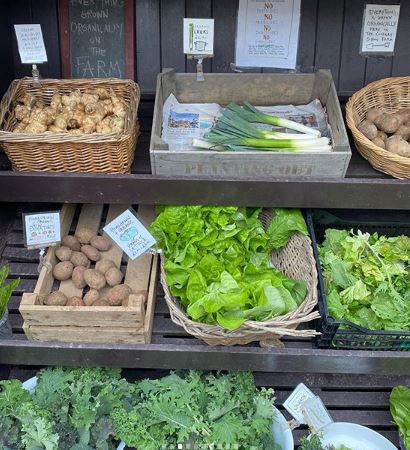
Everyone on the farm and gardens continued to sow and plant for the past three months during the Covid-19 pandemic. They too are heroes providing nourishing nutrient dense super delicious vegetables and fruit to boost our immune system and keep us healthy. 


Now we are reaping the dedicated rewards of their hard work. Baskets of fresh peas, cucumbers, onions, broad beans, beets...the tomatoes have been ripening slowly for the past few weeks but now we have lots for the kitchens, Farm Shop, Farmers Markets and online NeighbourFood Markets.


The field crop of flowery potatoes, a blight resistant variety called Orla, is ready. If you haven’t ever dug potatoes out of the ground, you haven’t lived! It’s a special ‘Woops in the tummy’ moment when you uncover those jewels under the stalk. Will it be one or two or maybe five or six….?


Everyday we have big platters and bowls of salads oozing with fresh flavours and vitamins and minerals, no need for supplements - this is the real thing. 


I want to share with you a range of beautiful chunky salads that can be easily put together with the gorgeous summer produce that is coming in from the garden and greenhouse everyday. So what's the secret of making a memorable salad, apart from beautiful fresh produce of course, here are a few tips...

1. Think about a contrast of colour, texture and flavour - counterbalance of sweet, salty and sharp and sour.

2. Vary the greens from crunchy little gem, bitter and beautiful Castlefranco, radicchio, mustard greens, mizuna, tender butterhead, watercress, pea tendrils, peppery rocket and edible flowers. 

3. Add lots of fresh herbs, mint leaves, little sprigs of tarragon, coriander leaves, dill and a variety of basil leaves, purple Opal, Lemon, Vietnamese, Thai, Genovese basil all produce a different burst of flavour. Even flat parsley and of course chervil.


4. Keep it chunky, a base of potatoes cooked in well salted water and tossed while still warm in perky dressing can have a myriad of other ingredients added. Substitute potatoes with chunky roast beetroot, sweet potatoes, white turnips...Pasta, egg noodles, rice or buckwheat noodles are also great.

5. Don't forget the pulses, chickpeas, cannellini beans, lentils, dress with a perky dressing - a great foundation to embellish with summer vegetables, herbs and spices.

6. Grains and pearl barley must be soaked overnight to make them digestible.

7. Freshly roasted and ground spices also add magic to your salads and dressings adding the flavour of the East and Far East, India, Morocco, Mexico depending on the combination you choose.

8. Vary the dressings too, a basic French dressing of 3 parts cold pressed extra virgin olive oil and 1 part aged vinegar seasoned with flaky sea salt and freshly ground black pepper can be superb, depending on the quality of its oils and vinegars and then there's flavoured oils – hazelnut, walnut, avocado…. 

Add a little honey, some excellent mustard, maybe some finely chopped shallot, crushed garlic and lots of fresh herbs - sublime to dress leaves or even a potato salad. The proportions could be 2-1 instead of 3-1 if you want a perkier flavour. But there's so much more, don't forget tahini, miso, pomegranate molasses, date syrup...Look out for Katie Sanderson's White Rayu Mausu. There are so many addictive hot sauces to experiment with now.


9. Sprinkle roasted, salted and toasted nuts and seeds over your salads - hazelnuts, walnuts, pecans, pistachios, sesame seeds, sunflower, pumpkin...

10. Dried fruits also add a burst of sweetness, extra nutrients and deliciousness. Apricots, dates, dried cherries or cranberries, raisins, sultanas, currants, goji berries….

11. Crunchy croutons, seedy brittle or crispy chicken skin add magic too.

12. Experiment with dressings, maybe natural yoghurt, lime and harissa, mayo, rice vinegar, grated new seasons garlic…. Combine grape seed oil, rice vinegar, miso and grated ginger. Experiment with different vinegars - white balsamic, apple cider vinegar, Moscatel vinegar. Don't forget a generous squeeze of lemon juice to cut the richness in a mayo dressed salad.

The world’s your oyster as salads are concerned – start with beautiful ingredients, be creative and adventurous…experiment and taste, taste, taste…

Monday, 1 June 2020

Comfort Eating and Immune-Boosting Foods for Covid Times


Covid-19 has galvanised our minds in so many areas. Being forced to press the ‘Pause Button’ gave many of us the opportunity to re-evaluate our ‘Grab, Gobble and Go’ lifestyle. Comforting food and sitting down together around the kitchen table has taken on a whole new importance…

The ‘penny’ seems to have really dropped about the value of investing time and energy in sourcing and cooking yummy nourishing meals to boost our immune systems. During ‘lockdown’, meal times at home are eagerly looked forward to, punctuating the day with delicious comforting food to cheer us up and lift our spirits.


I’m loving the explosion of activity and interest in cooking and baking. So many parents have not only discovered the joy of cooking a meal themselves but also the excitement and entertainment value of cooking with the kids – boys and girls of virtually every age are making and baking and growing and sowing…

There are many delicious stories of people dropping little gift packages of soups, stews, crusty loaves and all kinds of sweet treats to the gates of neighbours and friends to cheer them up and to the homeless and the front line workers. Nothing like a ‘care package’ to remind someone that they are remembered and loved and don’t you too feel the joy of sharing?


We’ve been getting endless recipe requests and lots of queries about foods to boost the immune system during these challenging times. There’s no quick fix, genetics, age and exercise also play their part as does our interaction with our environment, other people and animals. Social distancing, although essential in a crisis, to create a more sterile environment can weaken our immune system, a growing concern for many microbiologists at present.

So what foods? 


Invest your money in chemical free organic food and focus on sourcing real food not ‘edible food like substances’. Garlic has remarkably good antibacterial properties. Vitamin C rich foods like red peppers, you may be surprised to hear have three times more Vitamin C than citrus as well as being a brilliant source of beta carotene (11 times more than green peppers).

Leafy green vegetables have been in short supply over the past few weeks but the new season’s spinach is just ready to pick. Thanks to Popeye, we all know about iron but spinach is also rich in Vitamin C and E plus flavonoids and carotenoids and is believed to not only boost the immune system but fight cancers too.


Kefir, kombucha, kimchi and sauerkraut are powerhouses of goodness. Here’s a delicious quick spring onion kimchi, I’ve been loving making it with the new seasons spring onions from the greenhouses.


In my article a couple of weeks ago, I was telling you about the many good things about young beets, a three-in-one vegetable but I want to tell you something else, I’ve just learned that the fresh juicy beet leaves are even more nutritious than the beets themselves so don’t waste a scrap - add them to your salads.

Risotto is a perennial standby in my kitchen, made with organic chicken stock and a vehicle for all kinds of delicious seasonal additions. Wild garlic is almost over now but young nettle or spinach leaves and sorrel all add extra oomph. It would be difficult to think of a more comforting versatile and universally loved recipe – definitely one for your repertoire of favourite standbys. 


This recipe for Country Rhubarb Cake ranks high among my favourite recipes for this time of the year. This recipe is exactly the one taught to me by my mother more years ago than I like to remember, I haven’t changed any details and every time I make them, I’m transported back to our kitchen in the little village of Cullohill in Co. Laois and I can see Mum in one of her handmade flowery aprons taking the cake out of the oven to delight us when we rushed in from school wondering what would be today's treat – once again a special recipe triggering happy memories.

And a final thought: twelve weeks ago, concerns about food security seemed a million miles away, something that just, might happen in other countries but not in the least relevant to us. However, for those who queued and trawled the supermarket shelves for flour, fresh yeast, bread soda and baking powder in recent weeks, it now feels like a very relevant issue…

Being ‘locked down’ for several months has given us new insights and more empathy and compassion for others. We’ve got a taste of how it must feel to be a refugee or asylum seeker, confined and restricted, not being able to work and often not being able to cook or properly socialise with their families.

Issues like climate change, ‘zero waste’ and single-use plastic have become more urgent. We had become a heedless just ‘Chuck It’ society. When I was little, not long after the end of the war, one of the biggest crimes one could commit was to waste food. It’s still deep in my DNA, I often get teased because I’m so reluctant to throw away any food. I’m a ‘lover of leftovers’ and am surprised when people who love food don’t see any problem throwing out tasty morsels that can be the base of another delicious meal. The Covid-19 experience has forced a rethink in many areas of our lives and it’s no bad thing. Lockdown has been difficult for everyone and tragic for many, so let’s look for crumbs of comfort and cook together and count our blessings.

****

David Tanis’s Quick Scallion Kimchee

Serves 2-4

We’ve got lots and lots of beautiful spring onions at present so I’ve been loving this recipe.  ‘’Although the classic long-fermented cabbage-based kimchee is fairly easy to make, it does take time. This version with scallions is ridiculously simple and ready in a day or two. I learned how to make it from my friend Russell, a Los Angeles–born cook whose Korean mother made it throughout his childhood. Russell serves it to accompany perfectly steamed rice and simple grilled fish, a lovely combination. I like it chopped and stirred into a bowl of brothy ramen-style noodles, or tucked into a ham sandwich’’. 

4 bunches scallions
2 teaspoons salt
4 garlic cloves, thinly sliced
3/4 tablespoon raw sugar or dark brown sugar
1 tablespoon grated ginger
23g Korean red pepper flakes
3/4 tablespoon toasted sesame oil
3/4 tablespoon toasted sesame seeds
3/4 tablespoon fish sauce
3/4 tablespoon rice vinegar
Trim the scallions and cut into 7.5cm (3 inch) lengths. Put them in a glass or ceramic bowl, sprinkle with the salt, and let stand for 10 minutes.

Mix together the garlic, sugar, ginger, red pepper flakes, sesame oil, sesame seeds, fish sauce, and rice vinegar. Add to the scallions and toss well to coat.

Lay a plate over the bowl and leave in a warm place (at least 21°C/70°F) for 24 hours. Or, for a stronger-tasting kimchee, let ripen for up to 72 hours. It will keep for a month, refrigerated.

***

Country Rhubarb Cake 

This traditional rhubarb cake, based on an enriched bread dough, was made all over Ireland and is a treasured memory from my childhood. It would have originally been baked in the bastible or ‘baker’ over the open fire. My mother, who taught me this recipe, varied the filling with the seasons – first rhubarb, then gooseberries, later in the autumn, apples and plums.

Serves 8

350g (12oz) plain flour, plus extra for dusting
pinch of salt
1/2 teaspoon bread soda (bicarbonate of soda)
50g (2oz) caster sugar, plus extra for sprinkling
75g (3oz) butter
1 organic, free-range egg, if possible
165ml (5 1/2fl oz) milk, buttermilk or sour milk
680g (1 1/2lb) rhubarb, finely chopped
170–225g (6–8oz) granulated sugar
beaten organic, free-range egg, to glaze
softly whipped cream and soft brown sugar, to serve

Preheat the oven to 180ºC/350ºF/Gas Mark 4

25cm (10 inch) enamel or Pyrex pie plate

Sieve the flour, salt, bread soda and caster sugar into a bowl and rub in the butter. Whisk the egg and mix with the milk, buttermilk or sour milk. Make a well in the centre of the dry ingredients. Pour in most of the liquid and mix to a soft dough, add the remaining liquid if necessary.

Sprinkle a little flour on the work surface. Turn out the soft dough and pat gently into a round. Divide into two pieces: one should be slightly larger than the other; keep the larger one for the lid.

Dip your fingers in flour. Roll out the smaller piece of pastry to fit the enamel or Pyrex pie plate. Scatter the rhubarb all over the base and sprinkle with the granulated sugar. Brush the edges of the pastry with beaten egg. Roll out the other piece of dough until it is exactly the size to cover the plate, lift it on and press the edges gently to seal them. Don’t worry if you have to patch the soft dough.  Make a hole in the centre for the steam to escape. Brush again with beaten egg and sprinkle with a very small amount of caster sugar.

Bake for 45 minutes - 1 hour or until the rhubarb is soft and the crust is golden. Leave it to sit for 15–20 minutes before serving so that the juice can soak into the crust. Sprinkle with caster sugar. Serve still warm, with a bowl of softly whipped cream and some moist, brown sugar.

Monday, 18 May 2020

The Hungry Gap

The Hungry Gap is almost over, that’s the name gardeners traditionally gave to the three or four weeks between the end of the Winter vegetables – roots, kale and leeks and the beginning of the Summer bounty when there is little or no fresh produce available in gardens and virtually no greens on the supermarket shelves. Well, here at the Ballymaloe Cookery School, our Farm shop has been super busy for the past seven weeks since isolating regulations were introduced. People all over the country are discovering the seasonal treasures in their own parishes, local honey producers, farmhouse cheese makers, fish smokers, poultry and egg producers, charcuterie makers and artisans of all shapes and sizes.


We’re so fortunate to be in the midst of a 100 acre organic farm in East Cork with hens, pigs, cows, a micro diary which yields Jersey milk, home-made butter, buttermilk, yoghurt and thick rich cream everyday. A Bread Shed in a converted mega trailer and a Fermentation Palace in another repurposed trailer, but best of all from the food point of view is an acre block of greenhouses (a relic of a horticultural enterprise which operated right into the 1970’s ) which we now use as a protected garden. Although it’s not heated, the crops mature two or three weeks earlier than outdoor vegetables and herbs.


I feel elated when the first of the beetroot is ready to harvest. Three super delicious vegetables in one, the beets, stalks and leaves. Most people just think of pickled beetroot but the young beets are unbelievably delicious served as a hot vegetable particularly with a roast duck or a fish gratin. I pickle the stalks too. They cook in a minute or two, drizzle them with extra virgin olive oil and add a little shredded fresh mint for a feast. We add them to stews, fish dishes, on and on.. but certainly don’t waste a scrap.


We also have the first bunches of Spring onions and the new seasons Sturon onions are bigger than a golf ball by now with lots and lots of green leaf. I’ve been melting the sliced bulbs in extra virgin olive oil for four or five minutes on a gentle heat, then adding every scrap of the sliced greens, some thyme leaves… A gorgeous accompaniment to a main dish or add a good dollop of cream to make an unctuous sauce to accompany a steak. The green spears of asparagus continue to pop up in beds in the garden so do try this asparagus and spring onion tart sometime during the few short weeks when Irish asparagus is in season.   
The pea pods are already forming lots of pea shoots and flowers so we’ll have those in a couple of weeks but guess what – we’ll have some new potatoes ready to harvest and sell this coming week. There’s something especially exciting about the first of the new potatoes, every year when we sit down to enjoy the first of the crop, we make a wish and I remember my parents annual refrain, “Please God, hope we’ll all be as well this time next year”, all the more poignant in the midst of this Covid 19 Pandemic.
We’ve also had the very first globe artichokes this week. Simply cooked, in boiling well salted water with a dash of vinegar. Then served with a little bowl of lemon butter to dip the base of each leaf in and to enjoy the heart in chunks.
We’ve had lots of rhubarb for weeks now,  I eat it in some shape or form almost every day in a sweet or savoury recipe and as a compote for breakfast. A little stewed rhubarb makes a change from apple sauce and cuts the richness of pork deliciously.


Beetroot - Three delicious vegetables in one.

The new seasons beets are just ready to harvest.  The beets are swelling everyday but one can eat them from when they are the size of a table tennis ball.  We love them served hot as a vegetable when they are young and sweet but we use the stalks and leaves too.  The leaves are delicious served fresh in a salad or wilted down like spinach.  The stalks and leaves can be served together as in the Beetroot Tops recipe or the stalks can be blanched, refreshed and drained, then  tossed in a little extra virgin olive oil and some freshly snipped herbs and serve warm or cold.

How to cook Beetroot
Leave 5cm (2 inch) of leaf stalks on top and the whole root on the beet. Hold it under a running tap and wash off the mud with the palms of your hands, so that you don't damage the skin; otherwise the beetroot will bleed during cooking. Cover with cold water and add a little salt and sugar. Cover the pot, bring to the boil and simmer on top, or in an oven, for 15-20 minutes (in May/June when they are young) depending on size (they can take 1-2 hours in late Autumn and Winter when they are tough). Beetroot are usually cooked if the skin rubs off easily and if they dent when pressed with a finger.  If in doubt test with a skewer or the tip of a knife.  Use in chosen recipe.

Hot Beetroot with Cream and Parsley


Serves 4-6

675g (1 1/2 lbs) beetroot, cooked
15g (1/2oz) butter
salt and freshly ground pepper
a sprinkling of sugar
150-175ml (5-6fl ozs) cream
2 tablespoons of coarsely chopped parsley

Peel the freshly cooked beetroot, use rubber gloves for this operation if you are vain!  Chop the beetroot flesh into cubes.  Melt the butter in a sauté pan, add the beetroot toss, add the cream, allow to bubble for a few minutes.  Season with salt and freshly ground pepper and sugar.  Taste and add a little lemon juice if necessary. Scatter with fresh parsley and serve immediately. 


Beetroot Tops (Stalks and Leaves)
Young beetroot tops are full of flavour and are often unnecessarily discarded; but if you grow your own beetroots, remember to cook the stalks as well. When the leaves are tiny they make a really worthwhile addition to the salad bowl, both in terms of nutrition and flavour. This isn’t worth doing unless you have lovely young leaves. When they become old and slightly wilted, feed them to the hens or add them to the compost.

Serves 4

450g (1lb) fresh beetroot tops
salt and freshly ground pepper
butter or olive oil

Keeping them separate, cut the beetroot stalks and leaves into rough 5cm (2in) pieces. First cook the stalks in boiling salted water (1.8 litres/3 pints water to 1 1⁄2 teaspoons salt) for 2-4 minutes or until tender. Then add the leaves and cook for a further 2–3 minutes. Drain, season and toss in a little butter or olive oil. Serve immediately.


Beet Stalks with Olive Oil and Mint

Prepare and cook the beet stalks as above, drain well. Drizzle with extra virgin olive oil and sprinkle with freshly chopped spearmint. A simple but truly delicious combination.

Beet Leaves


Serves 4-6

In season: May-early June

Here are three different basic methods of cooking beet greens.

900g (2lb) fresh beetroot leaves, with stalks removed (cook stalks separately)
salt, freshly ground pepper and a little freshly grated nutmeg
50-110g (2-4oz) butter

For preparation
Method 1 (Wilted Method)
Wash the prepared beetroot leaves and drain. Melt a scrap of butter in a wide frying pan, toss in as many beetroot leaves as will fit easily, season with salt and freshly ground pepper.  As soon as it wilts and becomes tender, strain off all the liquid, increase the heat and add some butter and freshly grated nutmeg.  Serve immediately.

Method 2 (Buttered Beet Greens)
Wash the prepared beetroot leaves and drain.  Put into a heavy saucepan on a very low heat, season and cover tightly. After a few minutes, stir and replace the lid. As soon as the leaves are cooked, about 5-8 minutes approx., strain off the copious amount of liquid that beetroot releases and press between two plates until almost dry. Chop or puree in a food processor if you like a smooth texture. Increase the heat, add butter, correct the seasoning and add a little freshly grated nutmeg to taste.

Method 3 (Buttered Beet Greens)
Cook the beet greens uncovered in a large saucepan of boiling salted water until soft, 4-5 minutes approx.  Drain and press out all the water. Continue as in method 2.  Method 3 produces fresher coloured leaves.

Beet Greens with Cream
Cook the beet greens by method 2 or 3, drain very well.  Add 225-340ml (8-12fl oz) cream to the beetroot and bring to the boil, stir well and thicken with a little roux if desired, otherwise stir over the heat until the beetroot has absorbed most of the cream.  Season with salt, pepper and freshly grated nutmeg to taste.  Creamed beet greens may be cooked ahead of time and reheated.

Poached Eggs with Beet Greens
A classic dish and one of the most delicious combinations.
Serve freshly poached free-range organic eggs on top of creamed beet greens - one of our favourite lunch or supper dishes.