Tuesday, 26 February 2019

Marmalade


The last few weeks have been a frenzy of marmalade making, Julia, and her team in the Farmers Market kitchen here at the Ballymaloe Cookery School, have been slicing and juicing surrounded by preserving pans of bubbling citrus peel.

The Seville and Malaga orange season is a short one – running from mid-December to the end of February so there’s still time to whizz off to the shops or Farmers Market to stock up with the bitter sweet, vitamin packed citrus before they disappear off the shelves until next year.


If your budget will stretch to it, buy more than you can – they will freeze perfectly. All you need to do is throw them into the freezer in a bag or box in the quantity you need for a batch of your favourite marmalade.

Seville Orange Marmalade is the real deal, bitter sweet, the ‘classic’, made famous by Paddington Bear. It’s stronger, sourer and tangier than preserves made from other citrus. Having said that, grapefruit, both ruby and tart, lemons, limes, clementines, tangerines, mandarins, bergamots, kumquats, alone or in combination make delicious marmalades.

How do you like yours? Marmalade is an intensely personal taste. Some, like me, enjoy it dark and bitter, others prefer it fresh and fruity, some love lots of peel, others prefer less chewy bits and more wobbly jelly.

Seville and Malaga oranges are so called, because they are indigenous to Southern Spain and grow in towns and villages along the roadside. On my first trip to Spain I was intrigued by how law-abiding the Spaniards appeared to be. They didn’t seem to pull the ripe oranges off the trees…but I soon realised that these were bitter oranges so were less appealing to eat fresh and you may be surprised to learn that Spaniards consider our passion for marmalade a bit bizarre!

Seville oranges tend to be unwaxed, so the skin will be softer and not as smooth as other citrus. Discard any that show signs of decay and seek out organic fruit. Make your marmalade in small batches – say 2- 3 kilos of fruit at a time. Make yourself a cup of coffee, find a high stool, grab a sharp knife, turn on the radio and hand slice the peel. It will be altogether better than the sludgy result one gets from the food processor or mincer, I find it therapeutic, but not everyone does. A batch a day is certainly manageable – even better if you can entice someone else to get involved in the slicing – maybe for a ‘bit of gas’ organise a Marmalade Party with a few friends and give them a present of a pot for their input.

Image: Sharon Dunne Dowdall

There’s magic in marmalade making, not sure what it is but there’s a terrific ‘feel good’ factor when you can admire a line of glistening jars like ‘good deeds’ on your kitchen shelf. A stocked pantry to see you through the year…

Apart from marmalade recipes there’s many good things that benefit from a few spoons of marmalade or a little bitter orange zest e.g. panna cotta, muffins or scones. Slather it over a loin of boiled bacon (remove the rind first) and pop it under the grill to make a super quick and delicious glaze.

Massage it over a chicken breast or wings with some grated ginger and a little orange juice and then there’s Marmalade steamed pudding, my father-in-law, Ivan’s favourite steamed pudding.

Old Fashioned Seville Orange Marmalade


Seville and Malaga oranges come into the shops after Christmas and are around for 4-5 weeks.


Makes approx. 7 lbs (3.2kg)
2lbs (900g) of Seville oranges, organic if possible
4 pints (2.3L/10 cups) water
1 organic lemon
3 1/4lbs (1.45kg/6 1/2 cups) granulated sugar (warmed)

(Note on warming sugar: The faster jam/marmalade is made the better. If you add cold sugar it will take longer to return to the boil and will taste less fresh. Heat your sugar in a stainless steel bowl in a moderate oven for about 15 minutes. Do not leave it in too long or it will start to melt).

Wash the fruit, cut in half and squeeze out the juice. Remove the membrane with a spoon, put with the pips and tie them in a piece of muslin. Slice the peel finely or coarsely, depending on how you like your marmalade. Put the peel, orange and lemon juice, bag of pips and water into a non-reactive bowl or saucepan overnight.

Next day, bring everything to the boil and simmer gently for about 2 hours until the peel is really soft and the liquid is reduced by half. Squeeze all the liquid from the bag of pips and remove it.
Add the warmed sugar and stir until all the sugar has been dissolved. Increase the heat and bring to a full rolling boil rapidly until setting point is reached 5-10 minutes approx. Test for a set, either with a sugar thermometer (it should register 220F), or with a saucer. Put a little marmalade on a cold saucer and cool for a few minutes. If it wrinkles when you push it with your finger, it's done.

Allow marmalade to sit in the saucepan for 15 minutes before bottling to prevent the peel from floating.  Pot into hot sterilized jars. Cover immediately and store in a cool dry dark place.

N.B. The peel must be absolutely soft before the sugar is added, otherwise when the sugar is added it will become very hard and no amount of boiling will soften it.

Wednesday, 13 February 2019

Happy Chinese New Year


Happy Chinese New Year! Are you ready for yet another celebration? These festivities go on for almost a month and red is the magic colour.
This is the ‘Year of the Pig’ which symbolises wealth. In China, every year has a zodiac animal, the cycle repeats every 12 years, making it easy to figure out whether it’s your year or not. Just check your age in multiples of 12.

For the Chinese, the Spring Festival is the most important celebration of the entire year, similar to Christmas for us westerners. It marks the coming of Spring and all the excitement and joy of new beginnings. Unlike Christmas in this part of the world, Chinese New Year is a movable feast, predicated by the Lunar rather than the Gregorian calendar. Technically it’s the longest Chinese holiday, celebrated by over 20% of the world’s population – how amazing is that!

Image credit: rd.com
The most significant element of the holiday is the family reunion which triggers the largest human migration in the entire world. Millions of diligent hard working people, young and old, who now live in cities, travel home to rural areas to get together with their elderly parents.

Apparently, desperate singles often resort to hiring a fake boy or girlfriend to take home to allay their parents’ concerns - continuing the family name is one of the most important elements of Chinese culture, a reason why the Chinese have such a huge population…
Lively music and dance plus copious quantities of delicious food are important elements of the festivities. There are spectacular parades in Chinatowns all over the world - traditional lion and unicorn dances, dragon parades, bell ringing and lots of fun and fireworks. Children receive gifts of red envelopes stuffed with lucky money.

The feasting and excitement will continue until the Lantern Festival, the 15th day of the Chinese New Year – the first new moon of the Lunar year so you’ll see lots of red lanterns in all shapes and sizes, widely available in Asian shops, if you want to have fun and enter into the spirit….

A myriad of superstitions are attached to the New Year…People ‘spring clean’ the house on the day before Chinese New Year to sweep away bad luck and make way for good vibes.

Showering is taboo on New Year’s Day, as is throwing out rubbish. Hair cutting too is out, so hair salons are closed…
There are celebrations in Dublin, Cork, and Belfast. Cork which has been twinned with Shanghai since 2005, hosted its first Chinese New Year Festival on February 4th. Many iconic buildings around the world, including the Mansion House in Dublin and City Hall in Cork are illuminated in red to mark the beginning of Chinese New Year.

Lots of foods are associated with Chinese New Year, particularly dumplings. Spring rolls are universally loved, easy to make and when fried resemble gold bars. Each food is symbolic in some way, long noodles symbolise longevity…Citrus are also considered to be lucky.

Several festive desserts are also much loved, Tangyuan a type of rice ball, sounds like reunion in Chinese so they are favourites. As is Nian Gao, a type of rice cake which symbolises success. Fa gao – is a hybrid of a muffin and a sponge cake, the name means ‘get rich’ so everyone wants some of those too. Some of these desserts can be an acquired taste for non-Chinese but if you get an opportunity, do taste them. 


I’ve been to China several times, so I’m even more excited about Chinese New Year and am planning a little Chinese feast to celebrate.

Those who are born in the Year of the Pig, may want to check out the Chinese zodiac. Your lucky numbers are 2, 5 and 8, Lucky colours are yellow, grey, brown and gold and lucky directions are southeast and northeast…how about that….

Seek out your local Chinese restaurant, better still invite a few friends around to enjoy a home cooked Chinese meal, and don’t forget to wish our Chinese friends ‘In Nian Kuai le’ – ‘Happy New Year’.

Enjoy and Happy New Year of the - Pig the symbol of wealth.

Friday, 1 February 2019

St Brigid's Day


My year is punctuated by little highlights, occasions to look forward
to and celebrate. I particularly love St Brigid’s Day, it’s now just
around the corner, on February 1st, so I’m all set to celebrate and to
share the story of this feisty woman with my students from all over
the world and everyone else around me. This is a quintessentially
Irish celebration, St Brigid’s Day or Lá Féile Bríde also marks the
beginning of Spring, the season of hope and new life and comes
about half way between the Winter Solstice and the Spring Equinox,
when days begin to lengthen. In Pagan times it was referred to as
Imbolc or Imbolg which translates literally
to ‘in the belly’. Imbolc is one of the four major fire festivals referred
to in Irish mythology, the others are Bealtaine, Lughnasa and
Samhain.

Brigid, an icon for women was born near Faughart just north of
Dundalk in the 5th Century. She is the goddess of fertility in Celtic
mythology, patron saint of dairy and founded the first monastery in
Ireland in Kildare.

Many legends are associated with Brigid who by all accounts was an
extraordinary woman – a force to be reckoned with, a feminine role
model, well before her time. So I’m overjoyed that at last there is a
movement to elevate St Brigid to here rightful place beside St Patrick
as our female patron saint.

Last year, and once again this year, there will be a celebration of Lá
Féile Bríde at the Irish Embassy in London, a gathering to celebrate
not just St Brigid but the achievements of Irish women around the
globe.

Image result for st brigids cross

Just as the shamrock is associated with St Patrick, the little woven
cross, made of rushes is associated with St Brigid and was chosen as
the RTE logo when the station launched in 1961, and it was used

until 1995. Let’s bring it back and display it proudly as a beautiful
symbol of our culture.

Last year, St Brigid’s cross maker extraordinaire, Patricia O’Flaherty,
came over from Ireland clutching a bag of freshly cut rushes to
demonstrate how to make the traditional St Brigid’s cross at the Irish
Embassy in London http://www.naomhpadraighandcrafts.com/ . She
makes many versions and I was intrigued to learn from her that
originally all counties in Ireland had different patterns which
sometimes even varied from parish to parish.

To invoke Saint Brigid’s blessing we have a little cross made of local
rushes hanging over the door in our micro dairy to protect our small
Jersey herd which produces the most delicious rich milk.


My research into St Brigid, mentioned not only dairy but also honey
and the tradition of eating a big plate of floury boiled potatoes
slathered in rich homemade butter on St Brigid’s Day or St Brigid’s
Eve.

So here’s a recipe for how to make your own home churned butter… It’s super easy. We use our own cream, but one can of course make
butter with any good rich cream. Just pop it into a bowl, whisk until it
becomes stiff, continue until the butter globules separate from from
the buttermilk. Strain, wash well, salt generously, and pat into little
slabs or butter balls – easy-peasy. Impressive and delicious, even for
chefs, to slather over potatoes or a thick slice of warm soda bread or
spotted dog. 
So let’s all make or buy a little St Brigid’s cross and make St Brigid’s
Day into a real celebration, sharing a traditional meal around the
kitchen table with family and friends.


Wednesday, 30 January 2019

Hot New Food Trends for 2019


I’m always excited about the start of a brand New Year, new resolutions, new opportunities, new challenges, lots of fun. So what might be coming down the line in 2019, what do we think is hot and what’s not?

Trends are notoriously volatile but in any business, it’s super important to keep an eye on the indications relevant to your area, analyse them but beware of following them slavishly.

In my business, keeping an eye on what’s happening on the food, farming and beverage scene is essential to staying on the cutting edge and attracting both customers and students from all around the world to Ballymaloe and Ireland.


I travel quite a bit. In 2018 I travelled to China and the US…New York, Florida, Portland, San Francisco, Los Angeles... Amsterdam, Copenhagen, Paris, Turin, London... Food is my subject and so I consider travel to be a vital element in my research. Everywhere I go, I meet artisan producers, farmers, fishermen, cheesemakers, visit Farmers Markets, seek out food trucks, taste street food and eat in a wide variety of cafes, neighbourhood restaurants, and fine dining establishments. I keep my eyes and ears open, ask lots of questions, take lots of photos and lots of notes.

So, here are some of my predictions for food trends in 2019 based on my observations …


The ‘clean eating fad’ it seems, is waning but has been partly subsumed into the vegan food movement. The number of people choosing a plant based or vegan diet continues to grow exponentially. Countless others are becoming flexitarians and are choosing to eat less meat and are actively seeking meat and poultry that has been ethically and humanely reared. Meat-free days are on the increase and multiple restaurants are now offering an optional Meat-Free Monday menu. Believe me this ‘meat-free movement’, now linked to climate change, is no ‘flash in the pan’. Pasture-raised is the buzz word here, rotating animals through lush grasslands can dramatically improve their health, the health of the soil, trapping CO2 in the soil where it belongs, helping with water reduction and reducing erosion – good news for Ireland.


We are edging ever closer to lab-grown meats becoming mainstream. Jaw-dropping amounts of money have been invested in ‘motherless meat’ in the past couple of decades. The Impossible Burger is now a reality, it can even bleed like a real burger if carefully cooked, however the jury is still out on the flavour. I’ve tasted three different versions of what are described as ‘insanely delicious’ plant based burgers and I’m here to tell you that ‘insanely delicious’ they are not, despite the considerable hype to the contrary. Look out for sushi grade ‘not tuna’- made from tomatoes… It’ll be interesting to watch this space, a phenomenal investment has already been sunk into this plant-based burger…

Expect to see more shopper support and shopping brands committed to good animal welfare practices and environmental stewardship. Businesses and farms that support programs to relieve poverty throughout the world are also influencing consumers and have become a definite global trend. Mindful choices, ‘waste not want not’, is a growing preoccupation, consequently some supermarkets are now selling ugly and misshapen but perfectly delicious and nutritious fruit and vegetables at a lower price point.
There’s a growing annoyance among consumers about the excess packaging they are forced to accept. There is a definite awareness of the damage that plastic is doing to our oceans and planet and that it is gradually leaching into our food. We will see an increase in more eco conscious packaging, single use plastic is being replaced by multi-use and compostable. We are all addicted to plastic so it will be a difficult habit to break. B.Y.O.V.B (bring your own vegetable bag) and coffee cup are becoming the norm. Waxed canvas or silicone alternatives for sandwiches and snacks is a significant growth area for manufacturers.

A growing body of research confirms that all disease starts in the gut… The realisation that both our physical and mental wellbeing depend on the health of our gut biome has prompted a huge increase in the number of probiotic foods that contain gut friendly bacteria to improve the immune system. Even granola bars, nut butters and soups are fortified but my advice is to eat real food, seek out raw milk, raw butter, good natural yoghurt, original cheeses, organic vegetables….and ditch ultra-processed food altogether.
Gut awareness continues to drive the interest in fermentation. Cool restaurants and hotels are serving house made kefirs, kombucha, kvass, drinking vinegars, sauerkraut, kimchi and other fermented foods. Bone broths are also having a tremendous revival, a very welcome trend.

Nootropics – brain food is coming to the fore, Crickets and other insects, (a ‘new’ inexpensive source of protein) are being added to processed foods.
In the US dietitians are becoming celebrities as the health crisis deepens and the rise in obesity, type 2 diabetes and autoimmune disease continue to increase at an alarming rate. We are moving towards more personalised food experience. Once again let's eat real, chemical-free food rather than ‘edible food-like substances’ that are unquestionably fuelling the health crisis. In the world of medicine, young doctors are calling for training in nutrition to equip them with the necessary knowledge to advise their patients on diet.

At last some good news for farmers and food producers, new routes to market have been developed where consumers / members order their food on-line, not from the supermarket, but directly from the farmer or food producer who gets 80% of the retail price as opposed to 25-35% through the current retail system. Farmdrop in the UK www.farmdrop.com  is a brilliant example as is NeighbourFood launched in Cork city in late November. It’s already increasing  membership and producers week by week – a very welcome development, check it out on www.neighbourfood.ie

On the global restaurant scene, molecular gastronomy appears to have peaked, top chefs are moving away from using spheres and extreme molecular elements and are putting down their paint brushes and tweezers and chucking out their palette knives – I’m told smears on plates and skid marks are out… It seems like growing numbers are annoyed by the favouritism shown by restaurant critics to avant-garde molecular food. More diners would like to see restaurants concentrating on flavour and not overly complicating dishes, just to make them look pretty. Apparently we’re also over frilly foliage and limp pea shoots but lots of edible flower petals are still in evidence. Small plates are a definite trend.


In the US, UK and several other countries, more people are eating at home, the millennials are cooking again. How cool is that? If you’re not convinced, pay a trip to a Farmers Market here in Ireland, London, New York or the Flea Market in Dublin and watch the action. Farm to Table and Root to Shoot eating continues to gather momentum and drive purchases. Urban vertical indoor farming in cities is exploding, reducing expensive and environmental impact. Amazon’s takeover of Wholefoods in the US is having a profound impact on retail. There are greenhouses on supermarket rooftops in Japan, talk of being able to pick your own tomatoes straight from the vine when shopping…. And Bill Gates has bought 25,000 acres to develop a new ‘smart city’ from the ground up.

Whether we like it or not, increased automation is coming our way – and fast. Robots are already making pizza in France and coffee in San Francisco. They are taking orders and delivering room service. Hotel employees are becoming increasingly concerned about their new rivals – certainly not good news for the job market. Smart fridges that will automatically replenish when you are out of the branded products you can’t live without, are already a reality. There is every conceivable type of meal kit and ready meal….Home delivery of restaurant meals, soon by drone rather than bike, it’s a brave new world out there…


Hot Ingredients
1.    Chefs and home cooks are becoming more adventurous with chilli pepper flakes, Aleppo Pepper or Pul Biber, Piment d’Espelette, Timut pepper from Nepal and Korean Gochugaru.
2.    
    Bitter greens of all kinds are on the best menus, Radichios, Chicory, Sorrell, Tardivo Dandelion leaves... Amaranth is the new Kale…

3.    Marine Munchies –Seaweed and sea vegetables, all more nutritious than anything on land and intriguingly delicious – dried seaweed sprinkles, kelp noodles, samphire, dillisk soda bread... Dillisk has three times the nutritional value of kale.

4.    More unusual herbs, Lovage, Claytonia, Hyssop, Shiso
Wild and foraged, Pennywort, Purslane, Winter Cress, Tagetes, Ground Elder, Chickweed….
5.    Artisan Bakeries - Real natural sourdough fermented for at least 24 hours, better still 48 hours, made with flour from heritage grains.
6.    Specialist Teas – Tea bars are springing up serving exquisite (and super expensive) teas like we can’t imagine, Pu-erh tea has changed my life. Check out a little Taiwanese tea bar in New York called Té on 10th Street. There are even tea cocktails now.
7.    Good fats are back, not just butter but ghee from grass-fed cows, organic pork lard, goose and duck fat…
8.    Argan oil and MCT oil
9.    Organic raw milk and raw butter ($19.99 a pound in San Francisco) much more nutrient dense and delicious.
10.   Puffed and popped snacks - organic popcorn with many flavours, sweet and savoury.
11.     Faux meat snacks, a big trend… Yuck!
12.     Alcohol-free spirits, booze-free cocktails, flavoured whiskeys, artisan gins, beers and ciders…
13.     Natural wines and organic wines are a particularly welcome trend for those who can no longer drink the chemical-laden cheap wines.
14.    Hemp-derived products are exploding…
15.    Doughnuts are still huge in every sense of the word, remember the excitement when Krispy Kreme opened in Dublin…
16.    We’ll see more African flavours, in particular Ethiopian food
17.    Flavours of the Pacific Rim (Asia, Oceanica and the Western coasts of North and South America) are also a strong trend so stock up on fish sauce, wasabi, lemongrass, star anise, pandan leaves, black sesame, soy sauce...
18.  Mushrooms, particularly the wild varieties are naturally rich in umami flavours so are being used in ever more creative ways to create ‘a meaty bite’.
19.  Pulses (peas, beans and lentils) are really having their moment, an important and inexpensive source of protein, there’s a growing choice of pulse-based snacks.
20.    Dried, pickled and smoked foods are ever more evident - smoked butter, salt, chill flakes, garlic, potatoes, carrots, black pudding – even porridge…
21.     Riced and diced as a carb substitute…cauliflower, Romanesco, broccoli…
22.   Stracciatella is everywhere, where can we get it here? – https://www.toonsbridgedairy.com/ .
23.   Cold brew coffee – nitro coffee…

That's just a taste of what's hot and what's emerging in 2019.

Monday, 14 January 2019

The Rise and Rise of Meat-Free Eating


Our eating habits have changed drastically in the last few decades. One in eight Britons are now vegetarian or vegan according to a recent report on food shopping. A further 21% claim to be flexitarian eating a predominantly ‘plant based’ diet, occasionally supplemented with a little meat or fish. That amounts to a staggering one third of UK consumers that have reduced or removed meat entirely from their diet. 


This rapid and dramatic change is being fuelled by the perception that farm animals are one of the major contributors to CO2 emissions… However it is important to realise that those statistics were based on ‘feed lot’ systems rather than grass fed or pasture raised cattle.

Animal welfare issues are high on the list of concerns that have swayed the 18-34 year olds. This age group particularly are becoming much more curious and concerned about how their food is being produced.


Many have lost trust in multinational food companies, supermarkets, governments and the health service. They are confused by food labelling and are becoming more and more desperate as food allergies and intolerances grow exponentially. Consumers are demonstrating increasing concern about the impact of our food choices and behaviour on the environment.

Haulie ploughing our organic glasshouses
The focus on the effect of plastic on our oceans (see BBC’s Blue Planet 2) and the fact that up to 9 different types of plastics were found in human stools in a recent study conducted by the Environment Agency Austria, has shocked people into action.
We want our governments to legislate for less plastic packaging and we want our supermarkets to be proactive about reducing plastic.
For the first time this year The Good Food Guide highlighted restaurants with vegan menus. The UK supermarket group Waitrose, have created vegan sections in 134 of their stores and launched a range of more than 40 vegan and vegetarian meals. This is not going to change anytime soon. My gut feeling is that a plant based diet with lots of fresh organic vegetables, fresh herbs and grains, organic eggs, dairy and some meat and fish is the best for humans, animals and the planet.

In the sage words of Michael Pollan, “Eat food, mostly plants and not too much”.


Our Dynamic Vegetarian Cooking course at the Ballymaloe Cookery School runs on 27th February this year.

See details and book here. 

Sunday, 6 January 2019

Little Women's Christmas


Nollaig Na mBan…

That’s the enchanting Irish name given to Women’s Little Christmas on the 6th of January– the feast of the Epiphany.
It’s the traditional end of the Christmas season, the day we take down the Christmas tree and pack the baubles and tinsel into the attic for another year. But most importantly, it’s the day when the women of Ireland get to have time off from household chores after all the festive cooking.

A special day to get together with friends, sisters, mothers and aunts…The men, cheerfully take over the household for the day so the women can gather together to party and have a glass of fizz.
I was surprised to discover that many other countries have a similar tradition although the date sometimes varies. 

The Nordic countries have many customs, as have Ukraine, Slovenia, Galicia and closer to home there are high jinks and ceilis in the Scottish highlands it’s called, Là Féill nan Rìgh, The Feast of the Kings in Gaelic. La Fête des Rois is also celebrated in France with the delicious Galette des Rois as the centre piece of the table. Every boulangére offers their version of the flaky pastry galette, with a little trinket known as a ‘fève’ hidden deep inside the marzipan filling. Each comes with a golden paper crown which the lucky person who finds the fève in their slice will wear when they are crowned king for the day.

Here in Ireland the custom had almost disappeared, apart from in the counties of Cork and Kerry but there has been an enthusiastic revival of Women’s Little Christmas in recent years. Many restaurants and hotels are offering jolly Nollaig na bMan celebrations with exciting entertainment, dancing and music as well as afternoon tea or dinner so the womenfolk can enjoy a night out.
Just found this funny poem on social media penned by Nuala Woulfe @NWoulfeWriter – a few lines to whet your appetite.

Mammys on the Dance Floor
Mammys on the dance floor, let out for the night,
Dancing round their handbags, whooping with delight,
Mammys on the dance floor, kicking up the dust
Checking out the six packs, overcome with lust!
Mammys on the dance floor, one more round of beer,
Eyeing up the bouncers, giving them the leer…


Monday, 31 December 2018

Best Cookbooks of 2018


Well Christmas is well and truly over for another year, not sure about you but I’ve already managed to break several of my New Year resolutions but despite the dark evenings I do love this time of year. Lots of chunky soups, comforting stews, steamed puddings and the smell of Seville orange marmalade bubbling in the pot. The bitter oranges are in the shops now, so rush out to buy more than you think you need, freeze some and use my Whole Orange Marmalade recipe (see Examiner website), whenever you are running out of Seville orange marmalade during the year.
Meanwhile how about some fresh new ideas to liven up your cooking for 2019. Here are some of my favorite new cookbooks to use up your Christmas book tokens:

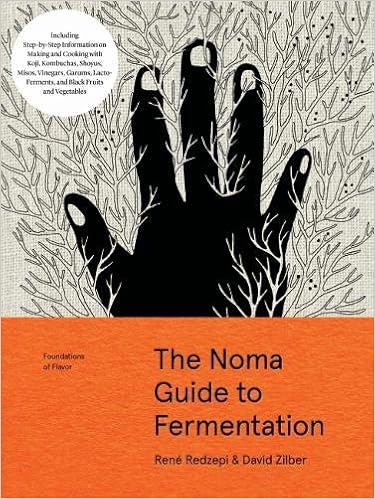
1.    The Noma Guide to Fermentation by René Redzepi and David Zilber
2.    Ottolenghi Simple: A Cookbook by Yotam Ottolenghi
3.    Extebarri by Jon Sarabia and Juan Pablo Cardenal
4.    Ethiopia: Recipes and Traditions from the Horn of Africa by Yohanis Gebreyesus
5.    Zaitoun: Recipes and Stories from the Palestinian Kitchen by Yasmin Khan
6.    Jamie Cooks Italy by Jamie Oliver
7.    Venice: Four Seasons of Home Cooking by Russell Norman
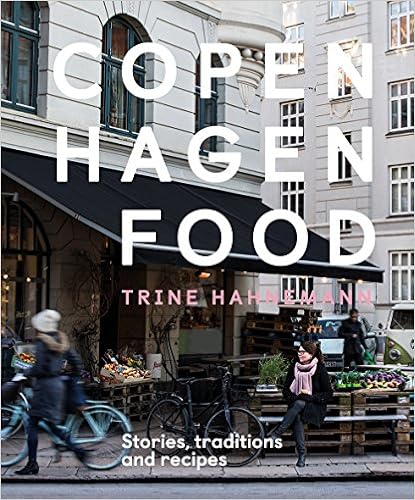
8.    Copenhagen Food: Stories, Traditions and Recipes by Trina Hahnemann
9.    How to Eat A Peach by Diana Henry
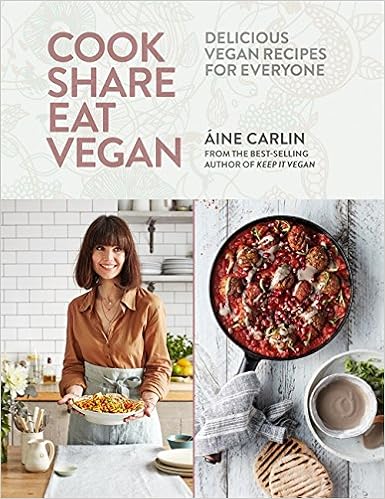
10.   Cook, Share, Eat, Vegan: Delicious Plant-based Recipes for Everyone by Áine Carlin
It may not be to everyone’s taste but my book of the year is the Noma Guide to Fermentation by René Redzepi and David Zilber. Few chefs know or understand how to use fermented foods to their full potential like René does. For several years now, David Zilber, Arielle Johnston and Lars Williams have been experimenting and perfecting all manner of fermented foods in their bunker turned fermentation lab beside Noma in Copenhagen, and have gone where few others have dared to venture. For those of us who have been experimenting over the years this book is the master class Penny, Marie and all of us in the ‘Bubble Shed’ at Ballymaloe Cookery School have been eagerly anticipating.

Yotam Ottolenghi’s new book, Ottolenghi Simple: A Cookbook, has taken the US by storm as well as this side of the world. Israeli born Yotam, author of Jerusalem and Plenty already has quite the following for his take on his beloved Middle Eastern food. However, he is not known for simple recipes so in the nick of time, before people get too exasperated, he’s published this volume of enticing dishes, many with fewer than 10 ingredients – and several that take less than 30 minutes to get on to the table. Love this book of quick and everyday recipes from one of the most creative chefs on the current food scene.


Ethiopia: Recipes and Traditions from the Horn of Africa by Yohanis Gebreyesus. Always fascinating to learn about the food of an area that is totally unfamiliar, so I was intrigued to find this book published by Kyle Books. I first tasted Ethiopian food in Santa Fe in California and later ate Teff, the fermented flat bread from a stall in Union Square Market in lower Manhattan. Ethiopia, a fascinating country that has never been colonized but it’s intriguing cuisine is enriched with the different religious influences of Christianity, Judaism and Islam, a combination unique to Africa. Chef Yohanis Gebreyesus, takes us on a journey of the essential Ethiopian dishes, interwoven with enchanting stories of local people and customs. He whetted my appetite not only for the food but for the country – must visit soon…

For a taste of Ethiopia here in East Cork, rush to Fizzy’s stall at the Mahon Point and Midleton Farmers Market. She also sells the quintessential Berber spice mixture that you’ll need for many of the dishes.

Trina Hahnemann’s name is not nearly as well known as René Redzepi but in her own way she is a much loved and highly respected ambassador for Scandinavian food. Trina has written ten best selling cookbooks full of gorgeous simple recipes. She is an enthusiastic advocate for sustainable solutions, organic sourcing, and food cooked with love. Copenhagen Food is a love letter to her native Copenhagen and the delicious dishes enjoyed from her home town.


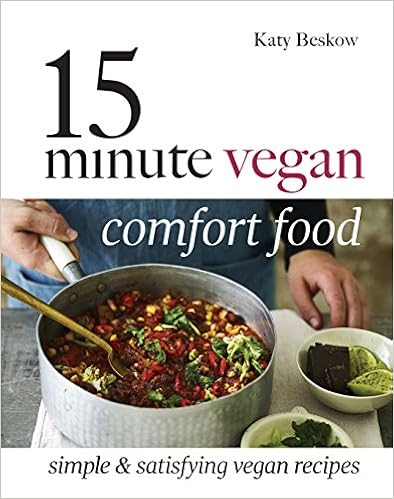
Of the new vegan cook books published in 2018, of which there were many here are a few worth a mention: Cook, Share, Eat, Vegan: Delicious Plant-based Recipes for Everyone by Áine Carlin; Veganish by Holly White. The runaway best seller is by The Bosh Boys, Bosh! Simple Recipes, Amazing Food, All Plants. And finally 15 Minute Vegan Comfort Food by Katy Beskow.


Jam makers should definitely seek out 5 Seasons of Jam by Lillie O’Brien of the London Borough of Jam and last but not least a shout out to some Irish titles, Currabinny Cookbook by James Kavanagh and William Murray (alumni of Ballymaloe Cookery School) which recently won the Irish Cookbook of the Year, Donal Skehan’s Meals in Minutes, Neven Maguire’s new book Home Economics for Life, Irish Seaweed Christmas Kitchen by Prannie Rhatigan one of the pioneers who highlighted the magic of seaweed long before it became trendy. There are many more but I am out of space however, I can’t forget How to Eat a Peach: Menus, Stories and Places by Diana Henry – certainly one of the great books of the year.